Kemetic Tradition
Sekhmet
SEK-met (Egyptian: Skhmt, 'the powerful one')
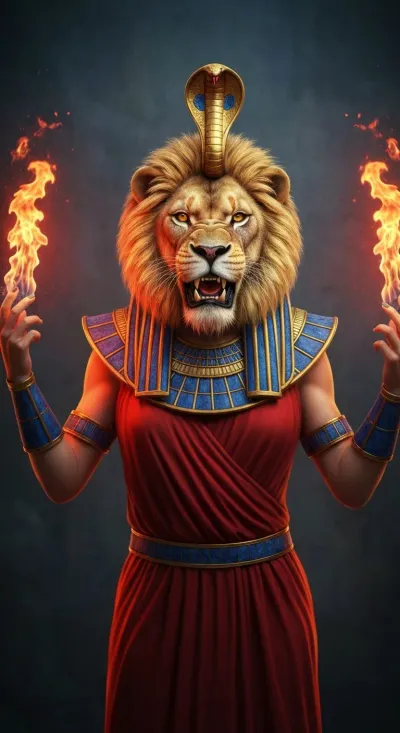
The lioness-headed Egyptian goddess of solar wrath, plague, and healing — the Eye of Ra who was sent to destroy humanity and then became the patroness of physicians who healed what her pestilence caused.
Sekhmet (Egyptian Skhmt, “the powerful one”) is the lioness-headed goddess of solar wrath — the Eye of Ra transformed into a destroying force, sent to punish humanity and very nearly destroying it entirely. She is simultaneously the goddess of plague and the goddess of medicine; her priests were physicians, her temples were healing sanctuaries. This paradox is the theological point: the force that causes disease is the force that can also cure it, if properly propitiated and redirected. In Egypt, the goddess who killed was also the goddess who healed.
The destruction of mankind
The myth preserved in Legends of the Gods: when humanity plotted against Ra in his old age, Ra convened the divine council and transformed his Eye into Sekhmet — the furious lioness — to punish the transgressors. Sekhmet’s slaughter was total and indiscriminate; she waded through human blood and found it beautiful. Ra, seeing that she would annihilate the species entirely, ordered the fields flooded with red-dyed beer, which Sekhmet drank thinking it blood. Drunk and sated, she ceased her destruction. Ra then withdrew to the heavens, weary of earthly rule. The myth encodes a lesson about the nature of divine wrath: once released, it tends toward excess and must be stopped not by force but by ruse and mercy.
The messengers of Sekhmet
The Pyramid Texts preserve early references to Sekhmet’s “messengers” — the agents of plague and pestilence who could be sent against enemies or, with the right formulas, redirected. Egyptian Magic by Budge documents the extensive tradition of protective magic against these messengers: amulets, spoken formulas, ritual offerings to Sekhmet herself to appease her wrath before it manifested as disease. The paradox deepened: the only effective protection against Sekhmet’s plague was Sekhmet’s own intercession.
Sekhmet and the physicians
Egyptian physicians were, in a formal theological sense, priests of Sekhmet. The logic was direct: disease comes from the goddess; healing is the reverse of disease; therefore healing is a sacred act requiring the same ritual competency as any temple service. This framework elevated medicine in Egypt to a sacred vocation rather than a merely technical one. The healer who cured a patient was not just applying technique but redirecting divine force.
Sekhmet in practice
In Kemetic reconstructionism, Sekhmet is approached with great respect and appropriate preparation. She is not a deity to work with casually. Her traditional offerings include red foods and drink, frankincense (solar incense), and acknowledgment of her full power. She is particularly invoked for protection against illness, for healing that conventional medicine has not reached, and for those working with situations requiring fierce strength rather than gentle persuasion. Egyptian Magic by Budge contains formulas in her tradition.
Related Terms
Bastet
The cat-headed Egyptian goddess of joy, music, protection, and the home — daughter of Ra who embodies the tamed solar warmth, guards households and children, and governs all the pleasures of daily life.
KemeticHathor
The Egyptian goddess of love, music, beauty, fertility, and the western sky — divine mother of Ra, protector of the dead, and the most joyful presence in the Egyptian pantheon.
KemeticHeka
The Egyptian principle of sacred, creative speech and magic — a primordial cosmic force older than the gods themselves, by which the universe was spoken into being and by which correctly spoken words carry genuine transformative power.
KemeticIsis
The Egyptian goddess of magic, healing, motherhood, and resurrection — she gathered the dismembered body of Osiris, mastered the secret name of Ra, and became the universal mother of the Greco-Roman world.
KemeticMa'at (goddess)
The Egyptian goddess personifying truth, justice, and cosmic order — her ostrich feather is the standard against which every human heart is weighed at death, and her presence sustains the universe.
KemeticPtah
The mummiform Egyptian god of Memphis who created the universe through divine thought and authoritative speech — patron of all craftsmen, architects, sculptors, and makers, and creator-god of the Memphite theological tradition.
KemeticRa
The self-created supreme solar deity of ancient Egypt, who sails the solar barque across the sky each day and through the underworld each night to be reborn as Khepri at dawn.