☙ Hellenic Festival · May
Thargelia
Significance
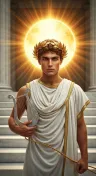
The birthday festival of Apollo and Artemis. Day one: a purification rite — the pharmakos (scapegoat) ritual, where a representative figure absorbed the city's pollution and was driven out. Day two: offerings of the first fruits (thargelos — a pot of first fruits cooked together), celebrating the coming harvest. The combination of purification and abundance is characteristic of Apollo: you cannot receive the harvest without first clearing what is rotting.
Traditional observances
- Thorough house purification — cleaning, clearing old items
- Make an offering of first fruits — the season's first produce
- Offerings to Apollo: bay laurel, musical offerings, white objects, sunlight
- Identify what needs to be driven out of your life before abundance can enter
Honored deities

Questions & Answers
Questions about Thargelia
What did the Thargelia teach the Greeks about first fruits and fertility?
In Nilsson's account of the Thargelia, the first-fruit loaf called the thargelos was understood not only as a gift but as a rite meant to promote fertility and secure a good year. In Hellenic religion, this shows that offerings to the Theoi often carry an older sacred logic: giving back the first yield helps renew the bond between human life, the land, and divine blessing.
Why was the pharmakos led around a town during the Thargelia?
Nilsson explains that leading the pharmakos around was likely an old agrarian rite meant to spread protective power and drive away harmful influences from fields and later from the whole community. Spiritually, it shows a Hellenic belief that ritual action can cleanse a place, mark boundaries, and restore right order when danger presses in.
What is Thargelia?
The birthday festival of Apollo and Artemis. Day one: a purification rite — the pharmakos (scapegoat) ritual, where a representative figure absorbed the city's pollution and was driven out. Day two: offerings of the first fruits (thargelos — a pot of first fruits cooked together), celebrating the coming harvest. The combination of purification and abundance is characteristic of Apollo: you cannot receive the harvest without first clearing what is rotting.
What is Thargelia in the Hellenic tradition?
Thargelia is a Hellenic festival. The birthday festival of Apollo and Artemis. Day one: a purification rite — the pharmakos (scapegoat) ritual, where a representative figure absorbed the city's pollution and was driven out. Day two: offerings of the first fruits (thargelos — a pot of first fruits cooked together), celebrating the coming harvest. The combination of purification and abundance is characteristic of Apollo: you cannot receive the harvest without first clearing what is rotting.
How does Harrison's analysis of the Thargelia illuminate the concept of the scapegoat?
Harrison shows that the pharmakos (scapegoat) of the Thargelia was a person -- sometimes willing, sometimes not -- who was dressed up, fed special foods, then driven from the city carrying the community's accumulated pollution. This practice reveals the most primitive mechanism of Greek purification: evil is conceived as a substance that can be physically transferred from the community to a single bearer and then expelled.
What does the Thargelia reveal about the practice of scapegoat rituals in Greece?
Harrison shows that the Thargelia, ostensibly Apollo's summer harvest festival, centered on the expulsion of a pharmakos -- a human scapegoat driven out of the city carrying the community's pollution. This 'purification' ritual was 'even more primitive and plain-spoken' than the Anthesteria, revealing that beneath Apollo's civilized worship lay archaic practices of communal guilt-transference and violent purgation.