𓂀 Kemetic Festival · December
Feast of Sokar (Heb Sokar)
Significance
Sokar is the hawk-headed funerary deity of Memphis and the Memphite necropolis, one of the oldest gods in the Egyptian pantheon, whose cult predates the unification of Upper and Lower Egypt. His name may derive from the phrase 'Seker her ib' ('who is beneath'), referring to his domain below the earth in the caverns of the Duat. During the New Kingdom he was merged theologically with Osiris to form Sokar-Osiris, and with Ptah to form Ptah-Sokar-Osiris, the composite deity who governed death, craft, and resurrection. The Feast of Sokar was closely linked to the solstice proximity and to the darkest period of the year — a time when the sun was at its most diminished and the underworld was felt to be closest to the surface. The Henu barque — an ornate boat-shaped sacred reliquary — was dragged in procession around the sanctuary walls, symbolizing Sokar's solar journey through the caverns of the night. The Pyramid Texts and the Amduat (the 'Book of What Is in the Underworld') give detailed accounts of Sokar's realm as the fourth and fifth hours of the night, the deepest and most still portion of the solar journey.
Traditional observances
- Observe the feast as a solstice-adjacent festival of the deep night and the underworld
- Light candles in a darkened room and sit with the darkness — do not rush to fill it with noise
- Offer to Sokar: dark bread, black candles, hawk imagery, copper or bronze objects (Ptah's metal)
- Offer to Ptah: craftsman's tools, blue-green faience, the sculptor's and builder's prayer
- Read or meditate on passages from the Amduat — the sun passes through the realm of Sokar and must navigate with the aid of his light even in the deepest dark
- Perform a ritual of navigating your own underworld: write down what you fear in the dark, what waits in your own caverns
- Acknowledge any craft or making work that has been neglected — Ptah-Sokar governs the hands that make things
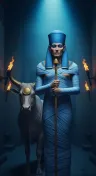
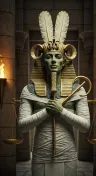
Honored deities
Questions & Answers
Questions about Feast of Sokar (Heb Sokar)
What is Feast of Sokar (Heb Sokar)?
Sokar is the hawk-headed funerary deity of Memphis and the Memphite necropolis, one of the oldest gods in the Egyptian pantheon, whose cult predates the unification of Upper and Lower Egypt. His name may derive from the phrase 'Seker her ib' ('who is beneath'), referring to his domain below the earth in the caverns of the Duat. During the New Kingdom he was merged theologically with Osiris to form Sokar-Osiris, and with Ptah to form Ptah-Sokar-Osiris, the composite deity who governed death, craft, and resurrection. The Feast of Sokar was closely linked to the solstice proximity and to the darkest period of the year — a time when the sun was at its most diminished and the underworld was felt to be closest to the surface. The Henu barque — an ornate boat-shaped sacred reliquary — was dragged in procession around the sanctuary walls, symbolizing Sokar's solar journey through the caverns of the night. The Pyramid Texts and the Amduat (the 'Book of What Is in the Underworld') give detailed accounts of Sokar's realm as the fourth and fifth hours of the night, the deepest and most still portion of the solar journey.
How do I celebrate Feast of Sokar (Heb Sokar)?
Here is how to celebrate Feast of Sokar (Heb Sokar): - Observe the feast as a solstice-adjacent festival of the deep night and the underworld - Light candles in a darkened room and sit with the darkness — do not rush to fill it with noise - Offer to Sokar: dark bread, black candles, hawk imagery, copper or bronze objects (Ptah's metal) - Offer to Ptah: craftsman's tools, blue-green faience, the sculptor's and builder's prayer - Read or meditate on passages from the Amduat — the sun passes through the realm of Sokar and must navigate with the aid of his light even in the deepest dark - Perform a ritual of navigating your own underworld: write down what you fear in the dark, what waits in your own caverns - Acknowledge any craft or making work that has been neglected — Ptah-Sokar governs the hands that make things
What is the spiritual meaning of Feast of Sokar (Heb Sokar)?
The spiritual theme of Feast of Sokar (Heb Sokar): Sokar's realm is not emptiness — it is the fourth and fifth hour of the night, when even the solar barque must slow down and move through stillness. The sun does not light this realm from outside; it carries its own dim flame through the absolute dark. What inner light do you carry when all outer light is gone?. Reflection prompts: What do you find in the darkest hours of the night — the 3 a.m. of your soul — and what does it tell you that the bright day cannot? Ptah spoke the world into existence through his heart and tongue. What have you been holding in your heart that your tongue has not yet spoken into being?
What historical sources mention Feast of Sokar (Heb Sokar)?
Historical sources for Feast of Sokar (Heb Sokar) include: Pyramid Texts, multiple utterances — Sokar as guardian of the Duat; Amduat (Book of What Is in the Underworld) — Sokar's realm as the fourth and fifth hours of the night, attested from New Kingdom royal tombs (KV34, tomb of Thutmose III); Calendar of Medinet Habu — Sokar feast offerings; Saqqara Texts — Sokar's earliest cult at Memphis; Book of Gates — Sokar in the night-journey of the solar barque.
What is Feast of Sokar (Heb Sokar) in the Kemetic tradition?
Feast of Sokar (Heb Sokar) is a Kemetic festival. Sokar is the hawk-headed funerary deity of Memphis and the Memphite necropolis, one of the oldest gods in the Egyptian pantheon, whose cult predates the unification of Upper and Lower Egypt. His name may derive from the phrase 'Seker her ib' ('who is beneath'), referring to his domain below the earth in the caverns of the Duat. During the New Kingdom he was merged theologically with Osiris to form Sokar-Osiris, and with Ptah to form Ptah-Sokar-Osiris, the composite deity who governed death, craft, and resurrection.
What should I meditate on during Feast of Sokar (Heb Sokar)?
During Feast of Sokar (Heb Sokar), meditate on: Sokar's realm is not emptiness — it is the fourth and fifth hour of the night, when even the solar barque must slow down and move through stillness. The sun does not light this realm from outside; it carries its own dim flame through the absolute dark. What inner light do you carry when all outer light is gone?