𓂀 Kemetic Festival · June
Festival of the Going Forth of Min (Heb Min)
Significance
Min was one of the oldest gods in the Egyptian pantheon, a god of potent masculine creative force, fertility, the eastern desert and its trade routes, and the harvest of grain — particularly lettuce, which was considered an aphrodisiac because of the milky sap it emits and its association with Min's generative power. The Festival of the Going Forth of Min (also called the Min Festival or Harvest Festival) was both an agricultural rite — the beginning of the harvest season — and a royal renewal ceremony. The pharaoh ritually harvested the first sheaf of emmer wheat with a golden sickle while priests sang and the crowd cheered. A white bull decorated with sun-disc headdress was paraded before Min's statue. Four sparrows were released to the four cardinal directions, carrying news of the pharaoh's renewed power to all corners of the world. Min's ithyphallic form was not considered obscene in the Egyptian context — it was the visible sign of the generative force that sustained all creation, the same creative power that existed before the gods were born. His cult center was Koptos (Gebtu) and Akhmim (Ipu/Khent-Abt). The Calendar of Medinet Habu records the Min Festival with extensive offering lists.
Traditional observances
- Harvest: collect, preserve, or prepare the first produce of the season — whether from your garden or a farmers' market — as a first-fruits offering
- Offer to Min: white candles, lettuce, grain, the color white and black-and-white imagery, feathers (Min's distinctive twin plumes)
- Perform a ritual of creative potency: name something you are generating, creating, or bringing into the world, and commit to it with the same force as Min's raised arm
- Release four pieces of paper or four flowers to the four directions with prayers for abundance in each quarter of your life
- Celebrate the harvest of your own efforts: what seeds did you plant in the year (at Wep Ronpet or at the literal planting season) that are now producing results?
- Lettuce salad as sacred feast food — eat deliberately and with gratitude
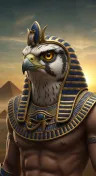
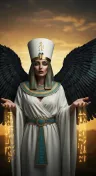
Honored deities
Questions & Answers
Questions about Festival of the Going Forth of Min (Heb Min)
What is Festival of the Going Forth of Min (Heb Min)?
Min was one of the oldest gods in the Egyptian pantheon, a god of potent masculine creative force, fertility, the eastern desert and its trade routes, and the harvest of grain — particularly lettuce, which was considered an aphrodisiac because of the milky sap it emits and its association with Min's generative power. The Festival of the Going Forth of Min (also called the Min Festival or Harvest Festival) was both an agricultural rite — the beginning of the harvest season — and a royal renewal ceremony. The pharaoh ritually harvested the first sheaf of emmer wheat with a golden sickle while priests sang and the crowd cheered. A white bull decorated with sun-disc headdress was paraded before Min's statue. Four sparrows were released to the four cardinal directions, carrying news of the pharaoh's renewed power to all corners of the world. Min's ithyphallic form was not considered obscene in the Egyptian context — it was the visible sign of the generative force that sustained all creation, the same creative power that existed before the gods were born. His cult center was Koptos (Gebtu) and Akhmim (Ipu/Khent-Abt). The Calendar of Medinet Habu records the Min Festival with extensive offering lists.
How do I celebrate Festival of the Going Forth of Min (Heb Min)?
Here is how to celebrate Festival of the Going Forth of Min (Heb Min): - Harvest: collect, preserve, or prepare the first produce of the season — whether from your garden or a farmers' market — as a first-fruits offering - Offer to Min: white candles, lettuce, grain, the color white and black-and-white imagery, feathers (Min's distinctive twin plumes) - Perform a ritual of creative potency: name something you are generating, creating, or bringing into the world, and commit to it with the same force as Min's raised arm - Release four pieces of paper or four flowers to the four directions with prayers for abundance in each quarter of your life - Celebrate the harvest of your own efforts: what seeds did you plant in the year (at Wep Ronpet or at the literal planting season) that are now producing results? - Lettuce salad as sacred feast food — eat deliberately and with gratitude
What is the spiritual meaning of Festival of the Going Forth of Min (Heb Min)?
The spiritual theme of Festival of the Going Forth of Min (Heb Min): Min's arm is perpetually raised — an act of generation that is never lowered, never depleted. His is the creative force that does not exhaust itself because it is not coming from a finite reservoir — it flows from the primordial wellspring of existence itself. Where in your creative life are you holding back because you fear running out? What would it look like to create from the unlimited source?. Reflection prompts: What are you in the process of generating — in your work, your creative life, your relationships, your spiritual practice — and what does it need from you to come fully to harvest? Where in your life are you withholding your full generative force, and why? What would be released if you stopped holding it back?
What is Festival of the Going Forth of Min (Heb Min) in the Kemetic tradition?
Festival of the Going Forth of Min (Heb Min) is a Kemetic festival. Min was one of the oldest gods in the Egyptian pantheon, a god of potent masculine creative force, fertility, the eastern desert and its trade routes, and the harvest of grain. The Festival of the Going Forth of Min was both an agricultural rite marking the beginning of the harvest season and a royal renewal ceremony in which the pharaoh ritually harvested the first sheaf of emmer wheat.
What historical sources mention Festival of the Going Forth of Min (Heb Min)?
Historical sources for Festival of the Going Forth of Min (Heb Min) include: Calendar of Medinet Habu — Min Festival offerings and royal rites; Luxor Temple reliefs of Ramesses III — the pharaoh before the statue of Min; Temple of Min at Koptos — earliest surviving Min statues and festival inscriptions (predynastic); Papyrus Harris I — record of Min Festival expenditures; Reliefs at Medinet Habu (Ramesses III) — the white bull procession and grain harvest.
What should I meditate on during Festival of the Going Forth of Min (Heb Min)?
During Festival of the Going Forth of Min (Heb Min), meditate on: Min's arm is perpetually raised — an act of generation that is never lowered, never depleted. His is the creative force that does not exhaust itself because it is not coming from a finite reservoir — it flows from the primordial wellspring of existence itself. Where in your creative life are you holding back because you fear running out?