Kemetic · The Book of the Dead · 12 of 13
Translation: Plates XI–XX
[1. I.e., "Eater of his own filth."
2. I.e., "Making to lift up his face."
3. I.e., "Great One."
4. I.e., Horus and Set.
5. Var. ###. See the end of the speech of the Osiris at the first arit.
6. I.e., "Repulsing the face, great of speech."
7 Var. ###
8. I.e., "Repulser of the crocodile."]
{p. 294}
Text: (1) THE FIFTH ARIT. The (2) name of the doorkeeper is Ankh-f-em-fent;[1] the name of the (3) watcher is Shabu; the name of the herald is Teb-hra-keha-kheft.[2]
Saith Osiris, the scribe Ani, triumphant, [when he cometh to this Arit]: I have brought unto thee the bones of thy jaws in Re-stau, I have brought thee thy backbone in Annu, (7) gathering together all thy members there. (8) I have driven back Apep for thee. I have poured water upon the wounds; I have made a path among you. I am the Ancient One among the gods. I have[3] made the offering of Osiris, who hath triumphed with victory, gathering his bones and bringing together all his limbs."
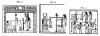
Vignette VI.: The sixth Arit, guarded by three gods; the first with the head of a jackal, and the second and third the head of a dog. The first holds an ear of corn (?), and each of the others a knife.
Text: (I) THE SIXTH ARIT. (2) The name of the doorkeeper is Atek-au-kehaq-kheru;[4] the name of the (4) watcher is An-hri; (5) the name of the herald is Ates-hra.
Saith Osiris, the scribe Ani, [when he cometh to this Arit]: "I have come (7) daily, I have come daily. I have made the way; I have passed along that which was created by Anubis. I am the lord of the (8) urerit crown . . . . . . . magical words. I, the avenger of right and truth, have avenged his eye. I have swathed the eye of Osiris, [I have] made the way]; Osiris Ani hath passed along [it] with you . . . . . . . .
Vignette VII.: The seventh Arit, guarded by three gods; the first with the head of a hare, the second the head of a lion, and the third the head of a man. The first and second hold a knife, and the third an ear of corn (?).
Text: (1) THE SEVENTH ARIT. The name of (2) the doorkeeper is Sekhem-Matenu-sen;[5] the name Of (4) the watcher is Aa-maa-kheru,[6] (5) and the name of the herald is Khesef-khemi.
Saith Osiris, [the scribe] Ani, [when he cometh to this Arit]: (6) "I have come
[1. I.e., "He liveth upon worms."
2. Var. ###.
3. For what follows of this speech Naville gives no equivalent.
4. Var. Seket-tau-keha-kheru.
5. Ates-sen.
6 Var. Aa-kheru.]
{p. 295}
unto thee, O Osiris, who art cleansed of [thine] impurities. Thou goest round about heaven, thou seest Ra, thou seest the beings who have knowledge. Hail (7) Only One! behold, thou art in the sektet boat,[1] He goeth round the horizon of heaven. I speak what I will unto his[2] body; (8) it waxeth strong and it cometh to life, as he spake. Thou turnest back his face. Prosper thou for -me all the ways [which lead] unto thee!"
Vignette I.: Ani and his wife Thuthu, with hands raised in adoration, approaching the first Sebkhet or Pylon, which is guarded by a bird-headed deity wearing a disk on his head, and sitting in a shrine the cornice of which is decorated with khakeru ornaments.
Text: [CHAPTER CXLVI.] THE FIRST PYLON. WORDS TO BE SPOKEN WHEN [ANI] COMETH UNTO THE FIRST PYLON. Saith Osiris Ani, triumphant: "Lo, the lady of terrors, with lofty walls, the sovereign lady, the mistress of destruction, who uttereth the words which drive back the destroyers, who delivereth from destruction him that travelleth along the way. The name of the doorkeeper is Neruit."
Vignette II.: The second Pylon, which is guarded by a lion-headed deity seated in a shrine, upon the top of which is a serpent.
Text: WORDS TO BE SPOKEN WHEN [ANI] COMETH UNTO THE SECOND PYLON. Saith Osiris, the scribe Ani, triumphant: "Lo, the lady of heaven, the mistress of the world, who devoureth with fire, the lady of mortals; how much greater is she than all men! The name of the doorkeeper is Mes-Ptah."
Vignette III.: The third Pylon, which is guarded by a man-headed deity seated in a shrine, the upper part of which is ornamented with the two utchats and the emblems of the orbit of the sun and of water.
Text: WORDS TO BE SPOKEN WHEN [ANI] COMETH UNTO THE THIRD PYLON OF THE HOUSE OF OSIRIS. Saith the scribe Ani, triumphant: "Lo, the lady of the
[1. Var. "Thou invokest Ra in the sektet boat of heaven."
2 Reading with Naville ###.]
{p. 296}
altar, the mighty one to whom offerings are made, the beloved[1] (?) of every god, who saileth up to Abtu. The name of the doorkeeper is Sebaq."
Vignette IV.: The fourth Pylon, which is guarded by a cow-headed deity seated in a shrine, the cornice of which is ornamented with uræi wearing disks.
Text: WORDS TO BE SPOKEN WHEN [ANI] COMETH UNTO THE FOURTH PYLON. Saith Osiris, the scribe Ani, [triumphant]: "Lo, she who prevaileth with knives, mistress of the world, destroyer of the foes of the Still-Heart, she who decreeth the escape of the needy from evil hap. The name of the doorkeeper is Nekau."
Vignette V.: The fifth Pylon, which is guarded by the hippopotamus deity, with her fore-feet resting upon the buckle, the emblem of protection, seated in a shrine, the cornice of which is ornamented with ###, emblematic of flames of fire.
Text: WORDS TO BE SPOKEN WHEN [ANI] COMETH UNTO THE FIFTH PYLON. Saith Osiris, the scribe Ani, triumphant: "Lo, the flame, the lady of breath (?) for the nostrils; one may not advance to entreat her shall not come into her presence. The name of the doorkeeper is Hentet-Arqiu."
Vignette VI.: The sixth Pylon, which is guarded by a deity in the form of a man holding a knife and a besom and seated in a shrine, above which is a serpent.
Text: WORDS TO BE SPOKEN WHEN [ANI] COMETH UNTO THE SIXTH PYLON. Saith Osiris, the scribe Ani, triumphant: "Lo, the lady of light, the mighty one, to whom men cry aloud; man knoweth neither her breadth nor her height; there was never found her like from the beginning (?). There is a serpent thereover whose size is not known; it was born in the presence of the Still-Heart. The name of the doorkeeper is Semati."
Vignette VII.: The seventh Pylon, which is guarded by a ram-headed deity holding a besom and seated in a shrine, the cornice of which is decorated with khakeru ornaments.
[1. The principal variants are "every god uniteth with her"; "the heart of every god rejoiceth in her." See Naville, Todtenbuch, Bd. II., Bl. 371.]
{p. 297}
Text: WORDS TO BE SPOKEN WHEN [ANI] COMETH UNTO THE SEVENTH PYLON. Saith Osiris, the scribe Ani, triumphant: "Lo, the robe which doth clothe the feeble one (i.e., the deceased), weeping for what it loveth and shroudeth. The name of the doorkeeper is Sakti-f."
Vignette VIII.: The eighth Pylon, which is guarded by a hawk wearing the crowns of the North and South, seated on a sepulchral chest with closed doors; before him is a besom, and behind him is the utchat. Above the shrine are two human-headed hawks, emblems of the souls of Ra and Osiris, and two emblems of life.
Text: WORDS TO BE SPOKEN WHEN [ANI] COMETH UNTO THE EIGHTH PYLON. Saith Osiris, the scribe Ani, triumphant: "Lo, the blazing fire, the flame whereof cannot be quenched, with tongues of flame which reach afar, the slaughtering one, the irresistible, through which one may not pass by reason of the hurt which it doeth. The name of the doorkeeper is Khu-tchet-f."[1]
Vignette IX: The ninth Pylon, which is guarded by a lion-headed deity wearing a disk and holding a besom, seated in a shrine, the cornice of which is ornamented with uræi wearing disks.
Text: WORDS TO BE SPOKEN WHEN [ANI] COMETH UNTO THE NINTH PYLON. Saith Osiris Ani, triumphant: "Lo, she who is chiefest, the lady of strength, who giveth quiet of heart to her lord. Her girth is three hundred and fifty measures; she is clothed with mother-of-emerald of the south; and she raiseth up the godlike form and clotheth the feeble one The name of the doorkeeper is Ari-su-tchesef."[2]
Vignette X.: The tenth Pylon, which is guarded by a ram-headed deity wearing the atef crown and holding a besom, seated in a shrine, upon the top of which are two serpents.
Text: WORDS TO BE SPOKEN WHEN [ANI] COMETH UNTO THE TENTH PYLON. Saith Osiris Ani, [triumphant]: "Lo, she who is loud of voice, she who causeth those to cry who entreat her, the fearful one who terrifieth, who feareth none that are therein. The name of the doorkeeper is Sekhen-ur."
[1. I.e., "Protecting his body."
2 I.e., "He maketh himself."]
{p. 298}
Appendix: The several "texts" of the next eleven Pylons are wanting in this papyrus. Translations of them are here given as they are found in a papyrus published by Naville, Todtenbuch, Bd. I., 131. 161, 162. It will be observed that the names of the doorkeepers are wanting, and also that each text, except in the case of the twenty-first Pylon, ends with words which refer to the examination of the dead at each gate.
THE ELEVENTH PYLON. "Lo, she who repeateth slaughter, the burner up of fiends, It she who is terrible at every gateway, who rejoiceth on the day of darkness. She judgeth the feeble swathed one."
THE TWELFTH PYLON. "Lo, the invoker of the two lands, who destroyeth with flashings and with fire those who come, the lady of splendour, who obeyeth her lord daily. She judgeth the feeble swathed one."
THE THIRTEENTH PYLON. "Lo, Isis, who hath stretched forth her hands and arms over it, and hath made Hapi to shine in his hidden place. She judgeth the feeble swathed one."
THE FOURTEENTH PYLON. "Lo, the lady of the knife, who danceth in blood; she maketh [the festival of] the god Hak on the day of judgment. She judgeth the feeble swathed one."
THE FIFTEENTH PYLON. "Lo, the Bloody Soul, who searcheth out and putteth to the test, who maketh inquiry and scrutiny, who cometh forth by night, and doth fetter the Fiend in his lair; may her hands be given to the Still-Heart in his hour, and may she make him to advance and come forth unto her. She judgeth the feeble swathed one."
THE SIXTEENTH PYLON. Saith Osiris, when he cometh unto this pylon: "Lo, the Terrible one, the lady of the rain storm, who planteth ruin in the souls of men, the devourer of the dead bodies of mankind, the orderer and creator of slaughters, who cometh forth. She judgeth the feeble swathed one."
THE SEVENTEENTH PYLON. "Lo, the Hewer-in-pieces in blood, . . . . . . the lady of flame. She judgeth the feeble swathed one."
THE EIGHTEENTH PYLON. "Lo, the Lover of fire, the purifier of sinners (?), the lover of slaughter, the chief of those who adore, the lady of the temple, the slaughterer of the fiends in the night. She judgeth the feeble bandaged one."
THE NINETEENTH PYLON. "Lo, the Dispenser of light while she liveth, the mistress of flames, the lady of the strength and of the writings of Ptah himself. She maketh trial of the swathings of Pa-an."
THE TWENTIETH PYLON. "Lo, she who is within the cavern of her lord, Clother is her name; she hideth what she hath made, she carrieth away hearts and greedily drinketh water. She judgeth the feeble swathed one."
THE TWENTY-FIRST PYLON. "Lo, the knife which cutteth when [its name] is uttered, and slayeth those who advance towards its flames. It hath secret plots and counsels."
{p. 299}
In the late recensions of the Book of the Dead,[1] the text referring to the twenty-first Pylon reads:--
(71) "Hail," saith Horus, "O twenty-first pylon of the Still-Heart. (72) I have made the way, I know thee, I know thy name, I know the name of the goddess who guardeth thee: 'Sword that smiteth at the utterance of its [own] name, the unknown (?) goddess with back-turned face, the overthrower of those who draw nigh unto her flame' is her name. Thou keepest the secret things of the avenger of the god whom thou guardest, and his name is Amem.[2] (73) He maketh it to come to pass that the persea trees grow not, that the acacia trees bring not forth, and that copper is not begotten in the mountain. The godlike beings of this pylon are seven gods. (74) Tchen or At is the name of the one at (?) the door; Hetep-mes[3] is the name of the second one; Mes-Sep[4] is the name of the third one Utch-re[5] is the name of the fourth one; "Ap-uat[6] is the name of the fifth one; Beq[7] is the name of the sixth one; Anubis is the name of the seventh one."
(75) "I have made the way. I am Amsu-Horus, the avenger of his father, the heir of his father Un-nefer. I have come and I have overthrown all foes of my father Osiris. I have come day by day with victory, doing myself the worship of the god, (76) in the house of his father Tmu, lord of Annu, triumphant in the southern sky. I have done what is right and true to him that hath made right and truth; I have made the Haker festival for the lord thereof; I have led the way in the festival; (77) I have made offerings of cakes to the lords of the altars; and I have brought offerings and oblations, and cakes and ale, and oxen and ducks, to my father Osiris Un-nefer. I rise up in order that my soul may be made one wholly; I cause the bennu bird to come forth at [my] words. I have come daily into the holy house to make offerings of incense. (78) I have brought garments of byssus. I have set forth on the lake in the boat. I have made Osiris, the overlord of the netherworld, to be victorious over his enemies; and I have carried away all his foes to the place of slaughter in the East; they shall never come forth from the durance of the god Seb therein. (79) I have made those who stand up against Ra to be still, and [I have] made him to be victorious. I have come even as a scribe, and I have made all things plain. I have caused the god to have the power of his legs. I have come into the house of him that is upon his hill,[8] and I have seen him that is ruler in the sacred hall. (80) I have gone into Re-stau; I have hidden myself, and I have found out the way; I have travelled unto An-rutf. I have clothed those who are naked. (81) I have sailed up to Abtu; I have praised the gods Hu and Sau. (82) 1 have entered into the house of Astes, I have made supplication to the gods Khati and Sekhet in the house of Neith," or, as others say, "the rulers. I have entered into Re-stau; I have hidden myself,
[1. See Lepsius, Todtenbuch, pl. LXIV.
2. I.e., "Devourer."
3. I.e., "Born of peace."
4. I.e., "Who giveth birth to fire."
5 I.e., "Strong of mouth."
6 I.e., "Opener of ways."
7 I.e., "Olive tree."
8 I.e., Anubis, the god of the dead.]
{p. 300}
and I have found out the way; I have travelled unto An-rutf. (83) I have clothed him who was naked. I have sailed up to Abtu; I have glorified Hu and Sau. (84) I have received my crown at my rising, and I have power to sit upon my throne, upon the throne of my father and of the great company of the gods. I have adored the meskhen of Ta-sert. (85) My mouth uttereth words with right and with truth. I have drowned the serpent Akhekh. I have come into the great hall which giveth strength unto the limbs; and it hath been granted to me to sail along in the boat of Hai. The fragrance of anti unguent ariseth from the hair of him who hath knowledge. (86) I have entered into the house of Astes, and I have made supplication to the gods Khati and Sekhet within the House of the Prince. (87) I have arrived as a favoured one in Tattu."
Vignette [1] [CHAPTER XVIII.--INTRODUCTION] (Upper register): The priest[2] An-maut-f, who has on the right side of his head the lock of Heru-pa-khrat, or Horus the Child, and who wears a leopard's skin, introducing Ani and his wife to the gods whose names are given in Plates XIII. and XIV.
Text: An-maut-f saith: "I have come unto you, O mighty and godlike rulers who are in heaven and in earth and under the earth; (2) and I have brought unto you Osiris Ani. He hath not sinned against any of the gods. Grant ye that he may be with you for all time."
(1) The adoration of Osiris, lord of Re-stau, and of the great company of the gods who are in the netherworld beside Osiris, the scribe Ani, who saith: (2) "Homage to thee, O ruler of Amenta, Unnefer within Abtu! I have come unto thee, and my heart holdeth right and truth. (3) There is no sin in my body; nor have I lied wilfully, nor have I done aught with a false heart. Grant thou to me food in the tomb, (4) and that I may come into [thy] presence at the altar of the lords of right and truth, and that I may enter into and come forth from the netherworld (my soul not being turned back), and that I may behold the face of the Sun, and that I may behold the Moon (5) for ever and ever."
Vignette (Lower register): The priest Se-mer-f[3] who has on the right side of his head the lock of Heru-pa-khrat and wears a leopard's skin, introducing Ani and his wife to the gods whose names are given in Plates XIII. and XIV.
[1. This and its companion vignette and the vignettes of Plates XIII.-XIV. form one composition.
2. Osiris is also called An-maut-f; see Lepsius, Todtenbuch, chap. cxlii., 1. 7.
3. For the functions of this priest see above, p. 268.]
{p. 301}
Text: Se-mer-f saith (1) I have come unto you, O godlike rulers who are in Re-stau, and I have brought unto you Osiris Ani. Grant ye [to him], as to the followers of Horus, cakes and water, and air, and a homestead in Sekhet-Hetep."[l]
(1) The adoration of Osiris, the lord of everlastingness, and of all the godlike rulers of Re-stau, by Osiris, [the scribe Ani], who (2) saith: "Homage to thee, O king of Amenta, prince of Akert, I have come unto thee. I know thy ways, (3) I am furnished with the forms which thou takest in the underworld. Grant thou to me a place in the underworld near unto the lords (4) of right and truth. May my homestead be abiding in Sekhet-hetep, and may I receive cakes in thy presence."
PLATE XIII.
Vignettes (Upper register): A pylon, or gateway, surmounted by the feathers of Maat and uræi wearing disks. (Lower register): A pylon, surmounted by Anubis and an utchat.
Text [CHAPTER XVIII.]: [" (1) Hail Thoth, who madest Osiris (2) victorious over his enemies, make thou Osiris [the scribe Ani] to be victorious over his enemies, as thou didst make Osiris victorious over his enemies' in the presence of (3) the godlike rulers who are with Ra and Osiris in Annu, on the night of 'the things for the night,'[2] and on the night of battle, and (4) on the shackling of the fiends, and on the day of the destruction of Neb-er-tcher."][3]
§A. Vignette: The gods Tmu, Shut Tefnut, Osiris,[4] and Thoth.
Text: (1) The great godlike rulers in Annu are Tmu, Shu, Tefnut [Osiris, and Thoth], (2) and the shackling of the Sebau signifieth the destruction of the fiends of Set when he worketh evil (3) a second time.
"Hail, Thoth, who madest Osiris victorious over his enemies, make thou the Osiris (4) Ani to be victorious over his enemies in the presence of the great divine beings who are in Tattu, on the night of making the Tat to stand up in Tattu."
[1. I.e., the Fields of Peace.
2. The words are explained to mean, "the daybreak on the sarcophagus of Osiris."
3. This section, omitted in the Ani papyrus, is supplied from the papyrus of Nebseni.
4. This god is omitted from the copy of this chapter given on Plate XXIII.]
{p. 302}
§B. Vignette: The gods Osiris, Isis, Nephthys, and Horus.
Text: (1) The great godlike rulers in Tattu are Osiris, Isis, Nephthys, and Horus, the avenger of his father. Now the "night of making the Tat to stand (2) Up in Tattu" signifieth [the lifting up of] the arm and shoulder of Osiris, lord of Sekhem; and these gods stand behind Osiris [to protect him] even as the swathings; which clothe[1] him.
(3) "Hail, Thoth, who madest Osiris victorious over his enemies, make thou the Osiris Ani triumphant over his enemies (4) in the presence of the great godlike rulers who are in Sekhem, on the night of the things of the night [festival] in Sekhem."
§C. Vignette: The gods Osiris and Horus, two utchats upon pylons, and the god Thoth.
Text: (1) The great godlike rulers who are in Sekhem are Horus, who is without sight, and Thoth, who is with the godlike rulers in Naarerutf. (2) Now the "night of the things of the night festival in Sekhem" signifieth the light of the rising sun on the coffin of Osiris.
"Hail, Thoth, who madest Osiris victorious (3) over his enemies, make thou the Osiris Ani triumphant over his enemies in the presence of the great godlike rulers in Pe and Tep,[2] on the (4) night of setting up the columns of Horus, and of making him to be established the heir of the things which belonged to his father."
§D. Vignette: The gods Horus, Isis, Mestha and Hapi.
Text: (1) The great divine rulers who are in Pe and Tep are Horus, Isis, Mestha, and Hapi. Now setting up the columns (2) of Horus [signifieth] the command given by Set unto his followers: "Set up columns upon it."
"Hail, Thoth, who madest Osiris victorious over his enemies (3), make thou the Osiris-Ani triumphant over his enemies in the presence of the great godlike
[1. The papyrus of Nebseni reads "Now the setting up of the double Tat signifieth the two shoulders and arms of Horus, lord of Sekhem; and they stand behind Osiris even as the swathings which clothe him."
2 See Brugsch, Dict. Géog., p. 213.]
{p. 303}
it rulers in . . . . Rekhit, on the (4) night when Isis lay down to keep watch in It order to make lamentation for her brother Osiris."
§E. Vignette: (1) The gods Isis, Horus, Anubis,[1] Mesthi, and Thoth.
Text: (1) The great godlike rulers who are in. . . . Rekhit are Isis, Horus, and Mestha.
"Hail, Thoth, who madest Osiris victorious (2) over his enemies, make thou the Osiris, the scribe Ani (triumphant in peace!), to be victorious over his enemies in the presence of the great godlike ones (3) who are in Abtu, on the night of the god Naker, at the separation of the wicked dead, at the judgment of spirits made just, (4) and at the arising of joy in Tenu."[2]
PLATE XIV.
§F. Vignette: The gods Osiris, Isis, and Ap-uat, and the TET.
Text [CHAPTER XVIII.]: (1) The great godlike rulers who are in Abtu are Osiris, Isis, and Ap-uat.
"Hail, Thoth, who madest Osiris victorious (2) over his enemies, make thou the Osiris Ani, the scribe and teller of the sacred offerings of all the gods, to be victorious (3) over his enemies in the presence of the godlike rulers who judge the dead, on the night of (4) the condemnation of those who are to be blotted out."
§G. Vignette: The gods Thoth, Osiris, Anubis, and Astennu.[2]
Text: (1) The great godlike rulers in the judgment of the dead are Thoth, Osiris, Anubis, and Astennu. Now (2) the "condemnation of those who are to be blotted out" is the withholding of that which is so needful to the souls of the children of impotent revolt.
"(3) Hail, Thoth, who madest Osiris victorious over his enemies, make thou the Osiris, the scribe Ani (triumphant!), to be victorious over his enemies in the
[1. Omitted on Plate XXIV.
2. ###, the capital of the eighth nome of Upper Egypt, situated near Abydos, and probably represented by the modem village of Kûm es-Sultân. It is the ### of the Coptic writers. See Brugsch, Dict. Géog., p. 951; and Amélineau, La Géographie de l'Égypte, p. 500.]
presence of the great godlike rulers, (4) on the festival of the breaking and turning up of the earth in Tattu, on the night of the breaking and turning up of the earth in their blood and of making Osiris to be victorious over his enemies."
§H. Vignette: The three gods of the festival of breaking up the earth in Tattu.
Text: (1) When the fiends of Set come and change themselves into beasts, the great godlike rulers, on the festival of the breaking and turning up of the earth in Tattu, (2) slay them in the presence of the gods therein, and their blood floweth among them as they are smitten down. (3) These things are allowed to be done by them by the judgment of those who are in Tattu.
"Hail, Thoth, who madest Osiris victorious over his enemies, make thou the Osiris Ani to be victorious over his enemies in the presence of the godlike rulers (4) who are in Naarutef, on the night of him who concealeth himself in divers forms, even Osiris."[1]
§1. Vignette: The gods Ra, Osiris, Shu, and Bebi,[2] dog-headed.
Text: (1) The great godlike rulers who are in Naarutef are Ra, Osiris, Shu, and Bebi.[3] Now the night of him who concealeth himself in divers forms, even Osiris," is when the thigh [and the head], and the heel, and the leg, are brought nigh unto the coffin of Osiris Un-nefer.
"Hail, Thoth, who madest Osiris victorious (3) over his enemies, make thou the Osiris Ani (triumphant before Osiris) victorious over his enemies in the presence of the great godlike rulers who are in (4) Re-stau, on the night when Anubis lay with his arms and his hands over the things behind Osiris, and it when Horus was made to triumph over his enemies."
§J. Vignette: The gods Horus, Osiris, Isis, and . . . . (?)
[1. Var. en seseta aa aru, "of making to be hidden the one mighty of forms" (i.e., Osiris). See Naville, Todtenbuch, Bd. II., Bl. 81.
2 Also written ###; see Brugsch, Wörterbuch, p. 387; Lanzone, Dizionario, p. 197.
3 Var. ### Ababi.]
{p. 305}
Text: (1) The great godlike rulers in Re-stau are Horus, Osiris, and Isis. The heart of Osiris rejoiceth, and the heart of Horus (2) is glad; and therefore are the east and the west at peace.
"Hail Thoth, who madest Osiris victorious over his enemies, (3) make thou the Osiris Ani, the scribe and teller of the divine offerings of all the gods, to triumph over his enemies in the presence of the ten (4) companies of great godlike rulers who are with Ra and with Osiris and with every god and goddess in the presence of Neb-er-tcher. He hath destroyed his (5) enemies, and he hath destroyed every evil thing belonging unto him."
Rubric: This chapter being recited, the deceased shall come forth by day, purified after death, and [he shall make all] the forms[1] (or transformations) which his heart shall dictate. Now if this chapter be recited over him, he shall come forth[2] upon earth, he shall escape from every fire; and none of the foul things which appertain unto him shall encompass him for everlasting[3] and for ever and for ever.
PLATE XV.
Vignette: A seated statue of Ani, the scribe, upon which the ceremony of opening the mouth"[4] un re, is being performed by the sem[5] priest, clad in a panther's skin and holding in his right hand the instrument Ur heka[6] i.e., "mighty one of enchantments." In front of the statue are: the
[1. Var. arit xeperuf.
2. The Papyrus of Nebseni has the better reading ufa pu tep ta, "he shall be in a good state upon earth."
3. Brugsch renders em shes maat by "sicut oequum et justum est"; Wörterbuch (Supp.), p. 1203.
4. For a description of this ceremony, see above, pp. 264-270.
5. Compare ### Naville, Todtenbuch, Bd. I., Bl. 34. In British Museum papyrus No. 10,470, sheet 8, the god Horus performs this ceremony upon the deceased, who is upon a stool.
6. See above, p. 264.]
{p. 306}
sepulchral chest, the instruments Seb-ur, Tun-tet, and Temanu, and the object Pesh-en-kef.[1]
Text [CHAPTER XXIII.]: (I) THE CHAPTER OF OPENING THE MOUTH OF OSIRIS, THE SCRIBE ANI. To be said:[2] "May Ptah open my mouth, and may the god of my town[3] loose the swathings, even the swathings[4] which are over my mouth (2). Moreover, may Thoth, being filled and furnished with charms, come and loose the bandages, the bandages of Set which fetter my mouth (3); and may the god Tmu hurl them' at those who would fetter [me] with them, and drive them back. May my mouth be opened, may my mouth be unclosed by Shu[6] (4) with his iron[7] knife, wherewith he opened the mouth of the gods. I am Sekhet,[8] and I sit upon the great western side of heaven. (5) 1 am the great goddess Sah[9] among the souls of Annu. Now as concerning every charm and all the words which may be spoken against me (6), may the gods resist them, and may each and every one of the company of the gods withstand it them."[10]
Text [CHAPTER XXIV.]: (I) THE CHAPTER OF BRINGING CHARMS UNTO OSIRIS ANI [IN NETER-KHERT]. [He saith]: "I am Tmu[11]-Khepera, who gave birth unto himself upon the thigh of his divine mother.[12] Those who are in Nu[13]are made wolves, and those who are among the godlike rulers (3) are become
[1. See above, p. 264.
2. Var. "he saith."
3. Var., "By Amen, the god of my town"; Lepsius, Todtenbuch, Pl. xiv.
4. Var., netiu.
5. Var., May Tmu give me my hand to shoot them at those who fetter [me]. May my mouth be given to me, may my mouth be opened."
6. Var., O Ptah.
7. Literally " iron of heaven " (baat en pet = Copt. ###); for discussions on the word, see Dümichen, Aeg. Zeit., 1874, p. 49, and the authorities quoted by Brugsch, Wörterbuch (Suppl.), p. 416.
8. The papyrus of Nebseni adds Uatchit.
9. Var., ###.
10. Var., "Them may the gods resist, and all the company of my gods, and all the company of their gods."
11. Many papyri omit Tmu.
12. Birch, "on the lap of his mother"; Pierret, "en haut de la cuisse de sa mère."
13. I.e., the sky.]
{p. 307}
hyenas.[1] Behold, I gather together the charm from every place where it is and from every man with whom it is,[2]' swifter than greyhounds and fleeter than light. (4) Hail thou who towest along the makhent boat of Ra, the stays of thy sails and of thy rudder are taut in the wind as thou sailest over the Lake of Fire in Neter-khert. Behold, thou gatherest together the charm (5) from every place where it is and from every man with whom it is, swifter than greyhounds and fleeter than light, [the charm] which createth the forms of existence from the (6) mother's thigh (?) and createth the gods from (or in) silence, and which giveth the heat of life unto the gods.[3] Behold, the charm is given unto me from wheresoever it is [and from him with whom it is], swifter than greyhounds and fleeter than light," or, (as others say), " fleeter than a shadow."
Appendix: The following chapter, which generally appears in other early copies of the Book of the Dead, is closely connected with the preceding chapter. It is here taken from the Papyrus of Nebseni.
(1) [CHAPTER XXV.] THE CHAPTER OF CAUSING THE DECEASED TO REMEMBER HIS (2) NAME IN NETER-KHERT. [He saith]: "May my name be given unto me in the great Double House, and may I remember my name in the House of Fire on the (3) night of counting the years and of telling the number of the months. I am with the Holy One, and I sit on the eastern side of heaven. If any god advanceth unto me, (4) forthwith I proclaim his name."
Vignette: The scribe Ani, clothed in white, and with his heart in his right hand, addressing the god Anubis.[4] Between them is a necklace of several rows of
[1. Var. behiu, an animal which is identified with the hyaena croenta by Hartmann (see Aeg. Zeit., 1864, p. 12, Col. 2).
2. Reading with the Nebseni papyrus ###.
3. Here the text is different from any given by Naville. The chief variants are ###, "which createth the gods from (or in) silence, and which maketh them powerless"; and ### "which maketh the gods to speak [from being] silent, and which maketh them speechless."
4. In the vignettes of this chapter published by M. Naville (Todtenbuch, Bd. I., Bl. 38) the deceased is represented: (1) seated, and addressing his heart, which stands on a support; (2) standing, holding in his hands a heart, which he offers to three deities. Another vignette represents a priest tying a heart on to a statue of the deceased; and in the late recension of the Book of the Dead published by Lepsius (Bl. 15) the deceased holds a heart to his left side and addresses a human-headed hawk emblematic of the soul.]
{p. 308}
coloured beads, the clasp of which is in the shape of a pylon or gateway, and to which is attached a pectoral bearing a representation of the boat of the sun, wherein is set a scarab, emblematic of the Sun.[1]
Text [CHAPTER XXVII: (1) CHAPTER OF GIVING A HEART UNTO OSIRIS ANI (2) IN THE UNDERWORLD. [Ani saith]: "May my heart be with me in the House of Hearts.[2] May my heart be with me, and may it rest in [me], or I shall not eat of the cakes of Osiris on the eastern[3] side of the Lake of Flowers,[4] (3) [neither shall I have] a boat wherein to go down the Nile, and another wherein to go up, nor shall I go forward in the boat with thee. May my mouth be given unto me that I may (4) speak with it, and my two feet to it walk withal, and my two hands and arms to overthrow my foe. May the doors of heaven be opened unto me[5](5); may Seb, the Prince of the gods, open wide his two jaws unto me; may he open my two eyes which are blinded; may he cause me to stretch out my (6) feet which are bound together; and may Anubis make my legs firm that I may stand upon them. May the goddess Sekhet make me to rise (7) so that I may ascend unto heaven, and there may that be done which I command in the House of the Ka of Ptah.[6] I know my heart, I have gotten the mastery over (8) my heart, I have gotten the mastery over my two hands and arms, I have gotten the mastery over my feet, and I have gained the power to do whatsoever my ka pleaseth. (9) My soul shall not be shut off from my body at the gates of the underworld; but I shall enter in peace, and I shall come forth in peace."
[1. A very fine set of examples of blue, green, and yellow glazed faïence pectorals inlaid with scarabs is exhibited in the Fourth Egyptian Room.
2. I.e., the judgment hall of Osiris, in which hearts were weighed.
3. Var. "West."
4. On the word ### see Brugsch, Wörterbuch (Suppl.), p. 1289, and Stern, Glossarium, p. 19, col. 2, where the various kinds of this sweet-smelling plant are enumerated.
5 Var. ### "May my two hands open [my] mouth in the earth": Naville, Todtenbuch, Bd. 11., Bl. 90.
6. I.e., the heavenly Memphis.]
{p. 309}
Text: [CHAPTER XXXB.]. (I) THE CHAPTER[1] OF NOT LETTING (2) THE HEART OF OSIRIS, THE SCRIBE OF THE SACRED OFFERINGS OF ALL THE GODS, ANI, TRIUMPHANT, BE DRIVEN FROM HIM IN THE UNDERWORLD. Ani saith: "My heart, my mother; my heart, my mother (3). My heart whereby I come into being. May there be nothing to withstand me at [my] judgment; may there be no, resistance against me by the Tchatcha; may there be no parting of thee from me in the presence of him who keepeth the Scales! Thou art my ka within (4) my body, [which] knitteth and strengtheneth my limbs. Mayest thou come forth in the place of happiness [to which] I advance. May the Shenit,[2] who make men to stand fast, not cause my name to stink."[3]
Vignette: Ani holding his soul in the form of a human-headed bird.
Text: [CHAPTER LXI.] (I) CHAPTER OF NOT LETTING THE SOUL OF A MAN BE TAKEN AWAY FROM HIM IN THE UNDERWORLD. Osiris the scribe Ani saith: "I, even I, am he (2) who came forth from the water-flood which I make to overflow and which becometh mighty as the River [Nile]."
Appendix; In many early papyri the text of Chapter LXI. forms part of a longer composition which M. Naville calls Chapters LXI.,[4] LX.,[5] and LXII.,[6] and which reads:--
(1) CHAPTER OF DRINKING WATER IN THE UNDERWORLD. [He saith]: "I, even I, am he who cometh forth from (2) Seb. The flood hath been given unto him,
[1. This chapter is usually accompanied by a vignette. In that in the papyrus of Nebseni the deceased is being weighed against his own heart; an ape, "Thoth, lord of the Balance," seated on a pedestal, holds the tongue of the balance. In British Museum Papyrus No. 9964 the deceased is also weighed against his own heart, but at the same time a figure of himself is also watching the process. In the papyrus of Sutimes a square weight lies in each pan of the scales. Other vignettes have simply a scarab, or the deceased addressing his heart, which rests on a standard. See Naville, Todtenbuch, Bd. I., Bl. 43.
2. A class of divine beings.
3. The chapter as here given is incomplete; the missing words are: "pleasant for us, pleasant is the hearing, and there is gladness of heart at the weighing of words. Let not lies be spoken against me near the god, in the presence of the great god, the lord of Amentet. Verily, how great shalt thou be when thou risest up in triumph!"
4. The vignette represents the deceased on his knees embracing his soul.
5. Vignette: a man kneeling and holding a lotus.
6. Vignettes: the deceased scooping water with his hands out of a tank.]
and he hath gotten power over it as Hapi. I, even I, open the (3) two doors of heaven: and the two doors of the watery abyss have been opened unto me by Thoth and by Hapi, the divine twin sons of heaven, (4) who are mighty in splendours. O grant ye that I may gain power over the water, even as Set overcame his foes on the day(?) (5) when he terrified the world. I have passed by the great ones shoulder against shoulder, even as they have passed by that great and splendid god who is (6) provided [with all things] and whose name is unknown. I have passed by the mighty one of the shoulder. (7) The flood of Osiris hath been passed through by me, and Thoth-Hapi-Tmu, the lord of the horizon, hath opened unto me the flood in his name, 'Thoth, the cleaver of the earth.' (8) I have gained power over the water, even as Set gained power over his foes. I have sailed over heaven. I am Ra. I am the Lion-god. I am the young bull (9). I have devoured the Thigh, I have seized the flesh. I have gone round about the streams in Seket-Aru. Boundless eternity hath been granted unto me, and, behold, (10) I am the heir of eternity; to me hath been given everlastingness."
Closely connected with the above chapter are the two following short chapters:--[1]
Vignette: The deceased drinking water from a running stream.
Text [CHAPTER LXIIIA.]: (I) THE CHAPTER OF DRINKING WATER AND OF NOT BEING BURNED IN THE FIRE. [The deceased] saith: "Hail, Bull of Amenta. I am brought unto thee, I am the oar of Ra (3) wherewith he ferried over the aged ones; let me not be buried nor consumed. I am Beb,[2] (4) the first-born son of Osiris, who doth wash every god within his eye in Annu. I am the Heir, (5) the exalted (?), the mighty one, the Still [of Heart]. I have made my name to flourish, and I have delivered [it], that I may make myself to live [in remembrance] on this day."
Vignette: The deceased standing near flames of fire.
Text [CHAPTER LXIIIB.]: (I) THE CHAPTER OF NOT BEING SCALDED WITH WATER. [He saith]: "I am the oar (2) made ready for rowing, wherewith Ra ferried over the Aged godlike ones. (3) I carry the moistures of Osiris to the lake away from the flame which cannot be passed (4); he is turned aside from the path thereof and he is not burned in the fire. I lie down with the hamemu; (5) I come unto the Lion's lair, killing and binding; and I follow the path by which he came forth."
Vignette: Ani carrying a sail, emblematic of breath and air.
Text [CHAPTER LIV.]: (1) CHAPTER OF GIVING BREATH IN THE UNDERWORLD. Saith Osiris Ani: "I am the Egg of the Great Cackler, and I watch and guard that
[1. For the texts see Naville, Todtenbuch, Bd. I., Bll. 73, 74.
2. The variants are ### and ###.]
{p. 311}
great place[1] (2) which the god Seb hath proclaimed upon earth. I live; and it liveth; I grow strong, I live, I sniff the air. I am (3) Utcha-aab,[2] and I go round behind [to protect] his egg. I have thwarted the chance of Set, the mighty one of strength. (4) Hail thou who makest pleasant the world with tchefa food, and who dwellest in the blue [sky]; watch over the babe in his cot when he cometh forth unto thee."
Appendix: The two following chapters, which are closely connected with the preceding chapter, are respectively supplied from Naville, Todtenbuch, Bd. I., 131. 67, and the Nebseni Papyrus.
Vignette: Anubis leading the deceased into the presence of Osiris.
Text: [CHAPTER LV.]: (I) ANOTHER CHAPTER OF GIVING BREATH. [He saith]: "I am Sabsabu. I am Shu. (2) I draw in the air in the presence of the god of sunbeams as far as the uttermost ends of heaven, as far as the ends of the earth, as far as the bounds of Shu (3); and I give breath unto those who become young [again]. I open my mouth, and I see with mine eyes."[3]
Vignette: A man holding a sail in his left hand.
Text [CHAPTER LVI.]: CHAPTER OF SNIFFING THE AIR UPON EARTH. [He saith]: "(2) Hail, Tmu, grant thou unto me the sweet breath which is in thy two nostrils. I embrace the mighty throne which is in Unnu,[4] and I watch and guard the Egg of the Great Cackler. I grow, and it groweth; it groweth, and I grow; I live, and it liveth; I sniff the air, and it sniffeth the air."
Vignette: Ani standing, with a staff in his left hand.
Text [CHAPTER XXIX.]: (I) THE CHAPTER OF NOT LETTING THE HEART OF A MAN BE TAKEN AWAY FROM HIM IN THE UNDERWORLD. Saith Osiris Ani, triumphant: "Turn thou back, O messenger of all the gods. (2) Is it that thou art come to carry away[5] this my heart which liveth? My heart which liveth
[1. The text of Lepsius gives "I guard that great egg," etc.
2. The variant text given by Naville indicates by that these words are the name or title of a god. Birch translates them by "Discriminator of Purity," and Pierret by "le sauvé dont le nom est pur."
3. For the texts see Naville, Todtenbuch, Bd. I., Bll. 67, 68, 69.
4. Hermopolis.
5. In a variant vignette given by Naville the deceased holding his heart in both hands offers it to three gods; and in another a man is about to fasten a necklace with a pendent heart to the statue of the deceased.]
shall not be given unto thee. (3) [As I] advance, the gods give ear unto my supplications, and they fall down upon their faces wheresoever they be."
PLATE XVI.
Vignette: Ani standing, with both hands raised in prayer, before four gods who are seated on a pedestal in the form of Maat; before him is his heart set upon a pedestal.
Text [CHAPTER XXVII.]: (I) THE CHAPTER OF NOT LETTING THE HEART OF A MAN BE TAKEN AWAY FROM HIM IN THE UNDERWORLD.[1] Saith Osiris Ani: "Hail, ye who carry away hearts, [hail] ye who steal hearts! (2) ye have done.[2] Homage to you, O ye lords of eternity, ye possessors of everlastingness, " take ye not away this heart of Osiris Ani (3) in your grasp, this heart of Osiris. And cause ye not evil words to spring up against it; because this heart of Osiris Ani is the heart of the one of many names, the mighty one whose words are his limbs, and who sendeth forth his heart to dwell in (4) his body. {???} heart of Osiris Ani is pleasant unto the gods; he is victorious, he hath {???} gotten power over it; he hath not revealed what hath been done unto it. He {???} gotten power (5) over his own limbs. His heart obeyeth him, he is the lord thereof, it is in his body, and it shall never fall away therefrom. I, Osiris, the scribe Ani, victorious in peace, and triumphant in the beautiful Amenta and on the mountain of eternity, bid thee be obedient unto me in the underworld."
Appendix: The three following chapters, which do not occur in the Ani papyrus, form part of the group of the chapters relating to the heart. They are here supplied from Naville, Todtenbuch, Bd. I., Pl. xl., xlii., xxxix.
[1. In Naville's edition there follow the words hab-nef ab-f xenti xat-f temam ab-f er neteru sexem am-f, "his heart goeth to inhabit his body; his heart is perfect before the gods, he gaineth possession of it."
2. The reading of Naville's edition is better here. "Ye who steal hearts, and who make the heart of a man to come into existence according to that which hath been done by him; may it (i.e., his heart) be made strong by you."]
{p. 313}
Text [CHAPTER XXIXA.]:[1] (1) THE CHAPTER OF THE HEART NOT BEING CARRIED AWAY IN THE UNDERWORLD. He saith: "My heart (2) is with me, and it shall never come to pass that it shall be carried away. I am the lord of hearts, the slayer of the heart. (3) I live in right and in truth, and I have my being therein. I am Horus, a pure heart (4) within a pure body. I live by my word, and my heart doth live. Let not my heart be taken away (5), let it not be wounded, and may no wounds or gashes be dealt upon me because it hath been taken away[2] from me. (6) May I exist in the body of my father Seb, and in the body of my mother Nut. I have not done evil (7) against the gods; I have not sinned with boasting."
Vignette: The deceased adoring a heart.
Text [CHAPTER XXXA.]: (I) THE CHAPTER OF NOT (2) LETTING THE HEART OF A MAN BE DRIVEN AWAY FROM HIM IN THE UNDERWORLD. [He saith]: "My heart, my mother; my heart, my mother. My heart of my life upon earth. May naught rise up (3) against me in judgment in the presence of the lord of the trial; let it not be said concerning me and of that which I have done. 'He hath done deeds against that which is right and true'; may naught be against me in the presence of the great god, the lord of Amenta. Homage to thee, O my heart! Homage to thee, O my heart! Homage to you, O my reins![3] Homage to you, O ye gods who rule over the divine clouds, and who (5) are exalted by reason of your sceptres; speak ye comfortably unto Ra, and make me to prosper before Nehebka." And behold him, even though he be joined to the earth in the innermost parts thereof, and though he be laid upon it, he is not dead in Amenta, but is a glorified being therein.
Vignette: The deceased holding his heart to his breast with his left hand, and kneeling before a monster with a knife in its hand.
Text [CHAPTER XXVIII.]: (1) [THE CHAPTER OF] NOT LETTING THE HEART OF THE DECEASED BE CARRIED AWAY IN THE UNDERWORLD. [Saith he]: (2) "Hail, Lion-god! I am Un.[4] That which I hate is the block of the god. Let not this my heart be taken away from me by (3) the Fighter[5] in Annu. Hail thou who dost bind Osiris, and who hast seen Set! Hail thou who returnest after smiting and destroying him. (4) This heart sitteth and weepeth in the presence of Osiris; it hath with it the staff for which it entreated him. May there be given unto me for it, may there be decreed unto me for it the hidden things[6] of the heart in the (5) house of Usekh-hra; may
[1. See Naville, Todtenbuch, Bd. I., Bl. 40.
2. Understanding some word like ###; see the text in Lepsius.
3. Brugsch believes that the word means the liver or kidneys, or some special organ.; see Wörterbuch, p. 421.
4. Reading; another variant has "I am Ra."
5 I.e., the being represented in the vignette.
6 Var. ta ab, "warmth of heart."]
{p. 314}
there be granted unto it food at the bidding of the Eight.[1] Let not this my heart be "taken from me! I make thee to dwell in thy place, joining together hearts in (6) Sekhet-hetepu, and years of strength in all places of strength, carrying away food (?) at thy it moment with thy hand according to thy great strength. My heart is placed upon the altars of Tmu (7), who leadeth it to the den of Set; he hath given unto me my heart, whose will hath been done by the godlike rulers in Neter-khert. When they find the leg[2] and the swathings they bury them."
Vignette: Ani and his wife Thuthu, each holding the emblem of air in the left hand, and drinking water with the right from a pool, on the borders of which are palm trees laden with fruit.
Text [CHAPTER LVIII.]: (1) THE CHAPTER OF BREATHING THE AIR AND OF HAVING POWER OVER THE WATER IN THE UNDERWORLD. Saith Osiris Ani: "Open to me! Who art thou then, and whither dost thou fare? (2) I am one of you. Who is it with thee? It is Merti. Separate thou from him, each from each, when thou enterest the Mesqen. He letteth me sail to the temple of the divine beings who have found their faces(?). (4) The name of the boat is 'Assembler of Souls'; the name of the oars is 'Making the hair to stand on end'; the name it of the hold is 'Good'; (5) and the name of the rudder is 'Making straight for the middle' . . . . . . [3] . . . . . . (6) Grant ye to me vessels of milk together with cakes, loaves of bread, cups of drink, and flesh in the temple of (7) Anubis."
Rubric: If this chapter be known [by Ani] he shall go in after having come forth from the underworld.
Vignette: Ani kneeling beside a pool of water, where grows a sycamore tree; in the tree appears the goddess Nut pouring water into Ani's hands from a vessel
[1. Var. Re xemennu, "Mouth of Hermopolis."
2. This meaning is indicated by the determinative in the variant given by Naville, Todtenbuch, Bd. II., Bl. 95. The whole sentence may be a rubrical direction.
3 The text here appears to be corrupt, or at least some words have been omitted, for the equivalent passage in Lepsius reads ###. The variant reading indicated by ki t' et shows that this passage offered difficulties to the ancient Egyptian readers.]
{p. 315}
Text [CHAPTER LIX.]: (I) THE CHAPTER OF SNIFFING THE AIR, AND OF GETTING POWER OVER THE WATERS IN THE UNDERWORLD. Saith Osiris Ani: "Hail, sycamore tree of the goddess Nut! Grant thou to me of the water and the air which are in (2) thee. I embrace thy throne which is in Unnu,[l] and I watch and guard (3) the egg of the Great Cackler. It groweth, I grow; it liveth, I live; (4) it sniffeth the air, I sniff the air, I the Osiris Ani, in triumph."
Vignette: Ani seated upon a chair before a table of offerings; [2] in his right hand he holds the kherp sceptre[3] and in his left a staff.
Text [CHAPTER XLIV]: (I) THE CHAPTER OF NOT DYING A SECOND TIME IN THE UNDERWORLD.[4] Saith Osiris Ani: "My place of hiding is opened, my place of hiding is revealed! Light hath shone (2) in the darkness. The eye of Horus hath ordered my coming into being, and the god Apuat hath nursed me. I have hidden (3) myself with you, O ye stars that never set. My brow is like unto that of Ra; my face is open; (4) my heart is upon its throne; I utter words, and I know; in very truth, I am Ra himself. I am not treated with scorn, (5) and violence is not done unto me. Thy father, the son of Nut, liveth for thee. I am thy first-born, (6) and I see thy mysteries. I am crowned like unto the king of the gods, and I shall not die a second time in the underworld."
Vignette: The mummy of Ani embraced by Anubis, the god of the dead.
Text [CHAPTER XLV.]: (I) THE CHAPTER OF NOT CORRUPTING IN THE UNDERWORLD. Saith Osiris Ani: "O thou who art without motion like unto Osiris! O thou who art without motion like unto Osiris! (2) O thou whose
[1. I.e., Hermopolis.
2. For an account of the manner in which altars and other objects were represented on Egyptian monuments, see Borchardt, Die Darstellung innen verzierter Schalen aus Aegyptischen Denkmätern (in Aeg. Zeitschrift, Bd. XXXI., 1893, p. 1).
3. For a kherp sceptre in bronze, see No. 22,842 in the 2nd Egyptian Room.
4. Chapters CLXXV. and CLXXVI. bear the same title. For Chapter CLXXV. see Plate XXIX.
Chapter CLXXVI. (Naville, Todtenbuch, Bd. I., Pl. cc.) reads:--
"What I hate is the land of Abydos. May I never enter into the den, and may there never be done unto me any of those things which the gods hate, for I am . . . . pure within the Mesqet. May Neb-er-tcher give unto me his splendours on the day of the funeral in the presence of the Lord of Things."
"If this chapter be known [he] shall be in the condition of one who is acquitted in the underworld."]
{p. 316}
limbs are without motion like unto [those of] Osiris! Let not thy limbs be (3) without motion, let them not corrupt, let them not pass away, let them not decay; let it be (4) done unto me even as if I were the god Osiris."
Rubric: If this chapter be known by the Osiris Ani, he shall not corrupt in the underworld.
Vignette: A doorway. By one post stands the soul of Ani in the form of a human-headed hawk and by the other the bird.
Text: [CHAPTER XLVI.] (I) THE CHAPTER OF NOT PERISHING AND OF BECOMING ALIVE IN THE UNDERWORLD. Saith Osiris Ani: "Hail, (2) children of:' Shu! Hail, children of Shu, [children of] the place of the dawn, who as the children of light have gained possession of his crown. May I rise up and may I fare forth like Osiris."
Vignette: Ani the scribe standing with his back to a block and knife
Text: [CHAPTER XL.] (I) THE CHAPTER OF NOT ENTERING IN UNTO THE BLOCK. Saith Osiris Ani: "The four bones[1] of my neck and of my back are joined together for me in heaven by Ra, the guardian of the earth. (2) This was granted on the day when my rising up out of weakness upon my two feet was ordered, on the day (3) when the hair was cut off. The bones of my neck and of my back have been joined together by Set and by the company of the gods, even as they were (4) in the time that is past; may nothing happen to break them apart. Make ye [me] strong against my father's murderer. I have gotten power over the two earths. Nut hath joined together my bones, and [I] behold [them] as they were in the time that is past [and I] see [them] even in the same order as they were [when] the gods had not come into being (6) in visible forms.[2] I am Penti, I, Osiris the scribe Ani, triumphant, am the heir of the great gods."
PLATE XVII.
Vignette: Ani standing in adoration before three gods, each of whom holds a sceptre in his left hand, and the symbol of life in his right.
[1. Adding thest ftu, from the papyrus of Nebseni.
2. Var. ### axemu. this word see Brugsch, Wörterbuch (Suppl.), p. 279.]
{p. 317}
Text [CHAPTER XCIII.]: (I) THE CHAPTER OF NOT LETTING A MAN PASS OVER TO THE EAST IN THE UNDERWORLD. Saith Osiris Ani: "Hail, manhood of (2) Ra, which advanceth and beateth down opposition; things which have been without movement for millions of years come into being through the god Baba. Hereby am I made stronger than (3) the strong, and hereby have I more power than they who are mighty. And therefore neither shall I be borne away nor carried by force to the East, to take part in the festivals of the fiends; (4) nor shall there [be given unto me] cruel gashes with knives, nor shall I be shut in on every side, nor gored by the horns [of the god Khepera]". . . . . . . . . . . .[1]
Vignette: Ani adoring a god in a boat whose head is turned face backwards.
Text [CHAPTER XCIIIA.]: ANOTHER CHAPTER.[2] [Saith Osiris Ani]: "So then shall no evil things be done unto me by the fiends, neither shall I (6) be gored by the horns [of Khepera]; and the manhood of Ra, which is the head of Osiris, shall not be swallowed up. Behold me, (7) I enter into my homestead, and I reap the harvest. The gods speak with me. (8) Gore thou not them, O Ra-khepera. In very truth sickness shall not arise in the eye of Tmu nor shall it (9) be destroyed. Let me be brought to an end, may I not be carried into the East to take part in the festivals of the fiends who are my enemies (10); may no cruel gashes be made in me. I, Osiris, the scribe Ani, the teller of the divine offerings of all the gods, triumphant with happy victory, the lord to be revered. am not carried away into the East."
Text [CHAPTER XLIII.]: (1) THE CHAPTER OF NOT LETTING THE HEAD OF A MAN BE CUT OFF FROM HIM IN THE UNDERWORLD. Saith Osiris Ani: (2) "I am the great One, son of the great One; I am Fire, the son of Fire, to whom was (3) given his head after it had been cut off. The head of Osiris was not carried away from him; let not the head of Osiris Ani (4) be carried away from him. I have knit together my bones, I have made myself whole and sound; I have become young once more; I am Osiris, the Lord of eternity."
Vignette: The mummy of Ani lying on a bier; above is his soul in the form of a human-headed bird, holding shen, the emblem of eternity, in its claws. At the head and foot stands an incense burner with fire in it.
[1. The text of the rest of this chapter is corrupt.
2. In other early papyri these two chapters form one; the division probably arose from a blunder on the part of the scribe.]
{p. 318}
Text [CHAPTER LXXXIX.]: (1) THE CHAPTER OF CAUSING THE SOUL TO BE UNITED TO ITS BODY IN THE UNDERWORLD. Saith Osiris Ani: "Hail, thou god Annitu! Hail, O Runner, (2) dwelling in thy hall! O thou great god, grant thou " that my soul may come unto me from wheresoever it may be. If it would tarry, then bring thou unto me (3) my soul from wheresoever it may be. [ If] thou findest [me], O Eye of Horus, make thou me to stand up like those beings who are like unto Osiris and who never lie down in death. Let not (4) Osiris Ani, triumphant, triumphant, lie down in death in Annu, the land wherein souls are joined unto their bodies, even in thousands. My soul doth bear away with it my victorious spirit (5) whithersoever it goeth[1] . . . . . . . . . . . (6) If it would tarry, grant thou that my soul may look upon my body. [If] thou findest [me], O Eye of Horus, make thou me to stand up like unto those[1] . . . . . . . (7) Hail, ye gods, who row in the boat of the lord of millions of years, who tow it (8) above the underworld, who make it to pass over the ways of Nu, who make souls to enter into their glorified bodies, (9) whose hands are filled with righteousness, and whose fingers grasp your sceptres, destroy ye (10) the foe. The boat of the Sun rejoiceth, and the great god advanceth in peace. Behold [ye gods], grant that this soul of Osiris Ani (11) may come forth triumphant before the gods, and triumphant before you, from the eastern horizon of heaven, to follow unto the place where it was yesterday, in peace, in peace, in Amenta. (12) May he behold his body, may he rest in his glorified frame, may he never perish, and may his body never see corruption."
Rubric: To be said over a golden [figure of a] soul inlaid with precious stones, which is to be placed on the neck of Osiris.
Vignette: Ani's soul, in the form of a human-headed bird, standing in front of a pylon.[2]
[1. Some words are omitted here.
2. The three following variants show: (1) the soul flying through the door of the tomb to the deceased; (2) the deceased, accompanied by his soul, standing at the open door of the tomb; and (3) the deceased, with his soul hovering over him, standing with his back to the door of the tomb, upon which is the disk of the rayed sun.
{Illustrations}
]
{p. 319}
Text [CHAPTER XCI.]: (I) THE CHAPTER OF NOT LETTING THE SOUL OF A MAN BE CAPTIVE IN THE UNDERWORLD. Saith Osiris Ani: "Hail thou who art exalted, thou who art adored, (2) thou mighty one of souls, thou Ram (or Soul), possessor of terrible power, who dost put fear of thee into the hearts of the gods, thou who art crowned upon thy mighty throne! It is he who maketh the path for the khu and for (3) the soul of Osiris Ani. I am furnished [with that which I need], I am a khu furnished [with that which I need], I have made my way unto the place wherein are Ra and Hathor."
Rubric: If this chapter be known, Ani shall become like unto a shining being fully equipped in the underworld. He shall not be stopped at any door in the underworld from going in and coming out millions of times.
Vignette:[1] Ani standing at the doorway of the tomb; and Ani's shadow, accompanied by his soul.
Text [CHAPTER XCII.]: (I) THE CHAPTER OF OPENING THE TOMB TO THE SOUL OF THE SHADOW, OF COMING FORTH BY DAY, AND OF GETTING POWER OVER THE LEGS. Saith Osiris, the scribe Ani, triumphant: "(2) The place of bondage is opened, that which was shut is opened,[2] and; the place of bondage is opened unto my soul [according to the bidding of][3] the eye of Horus. I have bound and stablished (3) glories upon the brow of Ra. [My] steps are made long, [my] thighs are lifted up; I have passed along the great path, and my limbs are strong. (4) 1 am Horus, the avenger of his father, and I bring the ureret crown to rest upon its place. The path of souls is opened [to my soul]."
PLATE XVIII.
My soul (5) seeth the great god within the boat of Ra on the day of souls. My soul is (6) in the front among those who tell the years. Come; the eye of Horus, which stablisheth glories (7) upon the brow of Ra and rays of light upon the faces of those who are with the limbs of Osiris, hath delivered my soul. (8) O shut ye not in my soul, fetter ye not my shade (9) may it behold the great god
[1. See Plate XVIII.
2 The reading of the Nebseni papyrus is ###.
3 Adding ### from the Nebseni papyrus.]
{p. 320}
within the shrine on the day of the judgment of souls, may it repeat the words of Osiris. (10) May those beings whose dwelling-places are hidden, who fetter the limbs of Osiris, who fetter the souls of the khu, who shut in (11) the shade[s] of the dead and can do evil unto me-may they do no evil unto me, may they turn away their path from me. Thy heart (12) is with thee; may my soul and my khu be prepared against their attack. May I sit down among the great rulers who (13) dwell in their abodes; may my soul not be set in bondage by those who fetter the limbs of Osiris, and who fetter souls, and who shut in (14) the shade[s] of the dead. The place which thou possessest, is it not Heaven? "
Rubric: If this chapter be known, he shall come forth by day and his soul shall not be shut in.
Vignette: Ani kneeling, with both hands raised in adoration, by the side of the Seker[1] boat placed upon its sledge.
Text [CHAPTER LXXIV.]: (I) THE CHAPTER OF WALKING WITH THE TWO LEGS, AND OF COMING FORTH UPON EARTH. Saith Osiris Ani: "Thou hast done all thy work, O Seker, thou hast done all thy work, O Seker, in thy dwelling place within my legs in the (2) underworld. I shine above the Leg[2] of the Sky, I come forth from heaven; I recline with the glorified (3) spirits. Alas! I am weak and feeble; alas! I am weak and feeble. I walk. I am weak and feeble in the (4) presence of those who gnash with the teeth in the underworld, I Osiris, the scribe Ani, triumphant in peace."
Vignette: The emblem of Amenta and Ani standing with a staff in his left hand.
Text [CHAPTER VIII.]: (I) THE CHAPTER OF PASSING THROUGH AMENTA, AND OF COMING FORTH BY DAY. Saith Osiris Ani: "The hour (?) openeth; (2) the head of Thoth is sealed up; perfect is the eye of Horus. I have delivered the eye of Horus which shineth with splendours on the forehead of Ra, (3) the father of the gods. I am the same Osiris, dwelling in Amenta. Osiris knoweth his day and that he shall not live therein; nor shall I live therein. (4) I am the Moon among the gods; I shall not come to an end. Stand up, therefore, O Horus; Osiris hath counted thee among the gods."
[1. The god Seker was a form of the night sun, like Ptah, Osiris and Tanen; see Lanzone, Dizionario, P. 1113.
2 The name of a constellation.]
{p. 321}
Text [CHAPTER II. (1) THE CHAPTER OF COMING FORTH BY DAY, AND OF LIVING AFTER DEATH. Saith Osiris Ani: "Hail, Only One, shining from the Moon! (2) Hail, Only One, shining from the Moon! Grant that this Osiris Ani may come forth among the multitudes which are round about thee; (3) let him be established as a dweller among the shining ones; and let the underworld be opened unto him. And behold Osiris, (4) Osiris Ani shall come forth by day to do his will upon earth among the living."
Vignette: Ani, standing with both hands raised in adoration before a ram crowned with plumes and disk; in front of the ram is a table, upon which are a libation vase and a lotus flower.
Text [CHAPTER IX.]: (1) THE CHAPTER OF COMING FORTH BY DAY, HAVING PASSED THROUGH THE TOMB. Saith Osiris Ani: "Hail Soul, thou mighty one of strength! (2) Verily I am here, I have come, I behold thee. I have passed through the underworld, I have seen [my] father (3) Osiris, I have scattered the gloom of night. I am his beloved one. I have come; I behold my father (4) Osiris. I have stabbed Set to the heart. I have done the things [needed] by my father Osiris. (5) I have opened every way in heaven and upon earth. I am the son beloved of his father Osiris (6). I have become a ruler, I have become glorious, I am furnished [with what I need]. Hail, all ye gods, and all ye shining ones, make ye a way for me, the Osiris, the scribe Ani, triumphant."
Vignette: Ani, with a staff in his left hand, standing before a door.
Text [CHAPTER CXXXII.]: THE CHAPTER OF MAKING A MAN TO RETURN TO SEE AGAIN HIS HOME UPON EARTH. Saith Osiris Ani: "I am the Lion-god (2) coming forth with strides. I have shot forth arrows, I have wounded [the prey], I have wounded the prey. I am the Eye of Horus; I have opened the (3) eye of Horus in his hour. I am come unto the furrows. Let Osiris Ani come in peace."
Vignette: Ani piercing a serpent.
Text [CHAPTER X. [XLVIII.]: ANOTHER CHAPTER OF ONE WHO COMETH FORTH BY DAY AGAINST HIS FOES IN THE UNDERWORLD. Saith Osiris Ani: "I have divided the heavens, (2) I have passed through the horizon, I have traversed the earth, [following] upon his footsteps. I am borne away by the mighty and shining ones because, behold, (3) I am furnished with millions of years which
{p. 322}
have magic virtues. I eat with my mouth, I chew with my jaws; and, behold, (4) I am the god who is the lord of the underworld: May there be given unto me, Osiris Ani, that which abideth for ever without corruption."
PLATE XIX.
Vignette: Ani standing, with both hands raised in adoration, before Ra, hawk-headed and seated in a boat floating upon the sky. On the bows sits Heru-pa-khrat (Harpocrates) or, "Horus the child"; and the side is ornamented with feathers of Maat, and the utchat. The handles of the oars and the tops of the rowlocks are shaped as hawks' heads, and on the blades of the oars are ###.
Text [CHAPTER XV.]: (I) A HYMN OF PRAISE TO RA WHEN HE RISETH UPON THE HORIZON, AND WHEN HE SETTETH IN THE [LAND OF] LIFE. Saith Osiris, the scribe Ani: "Homage to thee, O Ra, (2) when thou risest [as] Tmu-Heru-khuti (Harmachis), Thou art adored [by me] when thy beauties are before mine eyes, and when thy shining rays (3) [fall] upon my body. Thou goest forth in peace in the Sektet boat with [fair] winds, and thy heart is glad; [thou goest forth] in the Atet boat, (4) and its heart is glad. Thou stridest over the heavens in peace, and thy foes are cast down; the never-resting stars (5) sing hymns of praise unto thee, and the stars which never set glorify thee as thou (6) sinkest in the horizon of Manu, O thou who art beautiful in the two parts of heaven, thou lord who livest and art established, O my lord! Homage to thee, O thou who art Ra when thou risest, and Tmu (7) when thou settest in beauty. Thou risest and shinest upon the back of thy mother [the sky], O thou who art crowned king (8) of the gods. Nut doth homage unto thee, and everlasting and never-changing order embraceth thee at morn and at eve. Thou stridest over the heaven, being glad of heart, and the Lake (9) Testes is at peace. The Fiend hath fallen to the ground; his arms and his hands have been hewn off, and the knife hath severed the joints of his body. Ra hath a fair wind (10); the Sektet boat goeth forth and sailing along it cometh into port. The gods of the south and of the north, of the west and of the east praise thee, (11) from whom all forms of life came into being. Thou sendest forth the word, and the earth is flooded with silence, O thou only One, who livedst in heaven before ever the earth and the mountains were made. (12) O Runner, Lord, only One, thou maker of things which are, thou hast moulded the tongue of the company of the gods, thou hast drawn forth whatsoever cometh from the waters, and thou springest up from them over the flooded land of the Lake of Horus (13). Make me to sniff the air which cometh forth from thy nostrils, and the north wind which cometh forth from thy mother [the Sky]. Make thou glorious my shining form, O Osiris, make thou (14) strong my soul. Thou art worshipped in peace, O lord of the gods, thou art exalted by reason of thy wondrous works. Shine with thy rays of light upon my body day by day, upon me, (15) Osiris, the scribe, the teller of the divine offerings it of all the gods, the overseer of the granary of the lords of Abydos, the royal it scribe in truth, who loveth him (i.e., Ra); Ani, triumphant in peace."
Vignette: Ani, standing with both hands raised in adoration. Behind him is his wife:
Ausar nebt per qematet en Amen Thuthu.
Osiris, the lady of the house, priestess of Amen, Thuthu.
Text [CHAPTER XV.]: (1) A HYMN OF PRAISE. "O OSIRIS, lord of eternity, Un-nefer, Horus of the two horizons, whose forms are manifold, whose creations are without number, (2) Ptah-Seker-Tem in Annu, the lord of the tomb, and the creator of Memphis and of the gods, the guide of the underworld, whom [the gods] (3) glorify when thou settest in Nut. Isis embraceth thee in peace, and she driveth away the fiends from the mouth of (4) thy paths. Thou turnest thy face upon Amenta, thou makest the world to shine as with smu metal. The dead rise up to behold thee, they breathe the (5) air and they look upon thy face when the disk shineth on its horizon; their hearts are at peace for that they behold thee, O thou who art eternity and everlastingness."
[Litany]: (1) "Homage to thee, [O lord of] starry deities in An, and of heavenly beings in Kher-aba; thou god Unti, who art more glorious than the gods who are hidden in Annu.
"(2) Homage to thee, O An in Antes (?), Horus, thou dweller in both horizons, with long strides thou stridest over heaven, O thou who dwellest in both horizons.
"(3) Homage to thee, O soul of everlastingness, thou Soul who dwellest in Tattu, Un-nefer, son of Nut; thou art lord of Akert.
"(4) Homage to thee in thy dominion over Tattu; the urerit crown is established upon thy head; thou art the One whose strength is in himself, and thou dwellest in peace in Tattu.
"(5) Homage to thee, O lord of the acacia tree, the Seker boat is set upon its sledge; thou turnest back the Fiend, the worker of evil, and thou causest the utchat to rest upon its seat.
"(6) Homage to thee, O thou who art mighty in thine hour, thou great and mighty god, dweller in An-rut-f, lord of eternity and creator of everlastingness; thou art the lord of Suten-henen.
"(7) Homage to thee, O thou who restest upon Right and Truth, thou art the lord of Abtu, and thy limbs are joined unto Ta-sertet; thou art he to whom fraud and guile are hateful.
"(8) Homage to thee, O thou who art within thy boat, thou bringest Hapi (i.e., the Nile) forth from his source; the light shineth upon thy body, and thou art the dweller in Nekhen.
"(9) Homage to thee, O creator of the gods, thou King of the North and of the South; O Osiris, victorious, ruler of the world in thy gracious seasons; thou art the lord of the world.
"O grant thou unto me a path whereon I may pass in peace, for I am just and true; I have not spoken lies wittingly, nor have I done aught with deceit."
PLATE XX.
Vignette: Osiris and Isis in a sepulchral shrine.
Text [CHAPTER XV.]: (I) A HYMN OF PRAISE To RA WHEN HE RISETH IN THE EASTERN PART OF THE HEAVEN. They who are in (2) his train rejoice, and lo! Osiris Ani in triumph saith "Hail, thou Disk, thou lord of rays, who risest (3) in the horizon day by day. Shine thou with thy beams of light upon the face of Osiris Ani, who is victorious: for he singeth hymns of praise unto thee at (4) dawn, and he maketh thee to set at eventide with words of adoration. May the soul of Osiris Ani, the triumphant one, come forth with (5) thee from heaven, may he go forth in the matet boat, may he come into port in the sektet boat, may he cleave his path among the (6) never resting stars in the heavens."
Osiris Ani, being at peace and in triumph, adoreth his lord, the lord of (7) eternity, saying: "Homage to thee, O Horus of the two horizons, who art
{p. 325}
Khepera the self-created; when thou risest on the horizon and (8) sheddest thy beams of light upon the lands of the North and the South thou art beautiful, yea beautiful, and all the gods rejoice when they behold thee, (9) the King of heaven. The goddess Nebt-Unnet is stablished upon thy head; her portions of the south and of the north are upon thy brow (10); she taketh her place before thee. The god Thoth is stablished in the bows of thy boat to destroy utterly all thy foes. (11) Those who dwell in the underworld come forth to meet thee, bowing in homage as they come towards thee, and to behold [thy] beautiful (12) Image. And I have come before thee that I may be with thee to behold thy Disk every day. May I not be shut in the tomb, may I not be turned back (13), may the limbs of my body be made new again when I view thy beauties, even as do all thy favoured ones, {14) because I am one of those who worshipped thee whilst they lived upon earth. May I come in unto the land of eternity, may I come even (15) unto the everlasting land, for behold, O my lord, this hast thou ordained for me."
And lo, Osiris Ani, triumphant in peace, the triumphant one, saith (16) Homage to thee, O thou who risest in thy horizon as Ra, thou art stablished by a law which changeth not nor can it be altered. Thou passest over the sky, and every face watcheth thee (17) and thy course, for thou hast been hidden from their gaze. Thou dost show thyself at dawn and at eventide day by day. (18) The Sektet boat, wherein is thy majesty, goeth forth with might; thy beams shine upon [all] faces; [the number] of thy yellow rays cannot be known, nor can thy bright beams (19) be told. The lands of the gods, and the colours of the eastern lands of Punt, must be seen, ere that which is hidden (20) [in thee] may be measured [by man]. Alone and by thyself thou dost manifest thyself [when] thou comest into being above Nu. May Ani (21) advance, even as thou dost advance; may he never cease [to go forward], even as thy majesty ceaseth not [to go forward], even though it be for a moment; for with strides dost thou (22) in one little moment pass over the spaces which would need hundreds of thousands and millions of years [for man to pass over; this] thou doest, and then dost thou sink down. Thou (23) puttest an end to the hours of the night, and thou dost number them, even thou; thou endest them in thine own appointed season, and the earth becometh light. (24) Thou settest thyself before thy handiwork[1] in the likeness of Ra;[1] thou risest in the horizon."
[1. There is a play on the words ### and ###.]
{p. 326}
Osiris, the scribe Ani, triumphant, declareth his (25) praise of thee when thou shinest, and when thou risest at dawn he crieth in his joy at thy birth: (26) "Thou art crowned with the majesty of thy beauties; thou mouldest thy limbs as thou dost advance, and thou bringest them forth without birth-pangs in the form of Ra (27), as thou dost climb up into the upper air. Grant thou that I may come unto the heaven which is everlasting, and unto the mountain [where dwell] thy favoured ones. (28) May I be joined unto those shining beings, holy and perfect, who are in the underworld; and may I come forth with them to behold thy beauties when thou shinest (29) at eventide and goest to thy mother Nut.