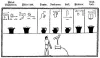
Kemetic · The Liturgy of Funerary Offerings · 1 of 5
Preface
THE present volume contains the Egyptian text and English translations of two copies of one of the most, important documents connected with the dead which have come down to us, namely, a detailed list of the offerings which were made to the dead, and also of the consecrating formulae which were recited by the chief officiating priest, as he presented them to a mummified body, or to a statue of the deceased. The ancient title of the composition, if it ever had one in early days, is unknown to us, but it has been called the "Liturgy of Funerary Offerings," because the document deals exclusively with the presentation of offerings to the dead, and because this title is convenient for reference.
This Liturgy is associated in the funerary texts in the tombs and papyri with another work entitled the "Book of Opening the Mouth" and this fact suggests that it is a portion of or a supplement to it, and that it is a development of the canonical List of Offerings which we have reason to believe was in existence under the IIIrd or IVth Dynasty. We know that funerary chapels were attached to the. pyramids and mastaba tombs of this period, and that offerings of meat and drink were made in them to the dead daily
by properly qualified priests. It follows as a matter of course that the proceedings of the priests were regulated by some system, and that some kind of written service must have been recited regularly, and we are justified in believing that the Liturgy of Funerary Offerings was that which was commonly said for kings and other royal personages, and for men of high civil and ecclesiastical rank.
In the case of the "Book of Opening the Mouth" the object of the recital was, in the earliest times at least, to bring about the reconstitution and resurrection of the dead man, and even in later times, when the work was recited before a statue, on which the accompanying ceremonies were performed, the idea of the Egyptians on this matter remained unchanged. It must be remembered also that the Egyptians intended by means of ceremonies and formulae to bring back the Ka, or double, either to the dead man, from whom it had been temporarily separated, or to a statue which represented him; and when this had been done they believed it to be their bounden duty to provide meat and drink for its maintenance. It was the Ka and the heart-soul (Ba), not the spirit-soul (Khu), which fed upon the offerings, and if meat and drink of a suitable character, and in sufficient quantity, were not provided for them, these suffered from hunger and thirst, and if the supply of offerings failed, they perished by starvation. The texts make it quite clear that the Egyptians believed in a dual-soul; one member could not die, but
the other only lived as long as it was fed with offerings by the living and provided with an abode, i.e., a statue. Offerings were brought to the funerary chapels and tombs daily, and additional gifts were presented on the days of all great festivals.
In very primitive times offerings of meat and drink were brought to the graves, and laid there for the souls of the dead to partake of at pleasure, just as is the case at the present day in -many places in the Sudan. When the ceremonies connected with the Book of Opening the Mouth were evolved, it became customary for the offerings to be brought forward at a certain place in the service, and afterwards, little by little, the canonical List of Offerings, and its later development, the Liturgy of Funerary Offerings, came into being.
As in the Book of Opening the Mouth the words spoken by the Kher-heb, or chief officiating priest, were believed to change the meat, and bread, and wine into divine substances, so in the Liturgy also the formula which was said over each element was supposed to change it into a divine and spiritual food, which was partaken of by the souls of the gods and of the dead. The material elements of the offerings were eaten by the priests and the relatives of the dead, and the act of eating brought them into communion with the blessed dead, and with the gods. The age of the belief in the transmutation of offerings cannot be stated, but it is certain that it was well known to the Egyptians under the Vth Dynasty, and there is reason
to think that it was not unknown to their ancestors in the latter part of the Neolithic Period, and that it is coeval with the indigenous African belief in the immortality of the soul, and in a life beyond the grave.
The life of the Liturgy of Funerary Offerings was long. It is found in a more or less complete form in many mastaba tombs of the Ancient Empire, in a very complete form in the pyramids of Unas and Pepi II., in incomplete forms on sarcophagi and in tombs of the XIIth Dynasty, and in the tomb of Seti I. of the XIXth Dynasty, and in complete forms in the tomb of Peta-Amen-hp of the XXVIth Dynasty and in papyri written in the first or second century of the Christian Era. The changes textually in the complete copies of the different periods are very few, and we may say that this work was used by generation after generation, in a practically unaltered form, for about four thousand years.
A description of the labours of my predecessors on this important text will be found in the introductory matter to the present volume.
E. A. WALLIS BUDGE.
BRITISH MUSEUM,
August 5th, 1909.
CHAP.
PAGE
PREFACE
I.
THE DOCTRINE OF OFFERINGS
II.
THE LITURGY OF FUNERARY OFFERINGS DESCRIBED
First Ceremony
Second Ceremony
Third Ceremony
Fourth Ceremony
Fifth Ceremony
Sixth Ceremony
III.
DESCRIPTION OF THE OFFERINGS
Seventh Ceremony
Eighth Ceremony
Ninth Ceremony
Tenth Ceremony
Eleventh Ceremony
Twelfth Ceremony
Thirteenth Ceremony
Fourteenth Ceremony
Fifteenth Ceremony
Sixteenth Ceremony
Seventeenth Ceremony
Eighteenth Ceremony
Nineteenth Ceremony
Twentieth Ceremony
Twenty-first Ceremony
Twenty-second Ceremony
Twenty-third Ceremony
Twenty-fourth Ceremony
Twenty-fifth Ceremony
}
Twenty-sixth Ceremony
Twenty-seventh Ceremony
Twenty-eighth--Thirty-fourth Ceremonies
Thirty-fifth Ceremony
Thirty-sixth Ceremony
Thirty-seventh Ceremony
Thirty-eighth Ceremony
IV.
THE LITURGY DESCRIBED
Thirty-ninth Ceremony
Fortieth Ceremony
Forty-first Ceremony
Forty-second Ceremony
Forty-third Ceremony
Forty-fourth Ceremony
Forty-fifth Ceremony
Forty-sixth Ceremony
Forty-seventh Ceremony
Forty-eighth Ceremony
Forty-ninth Ceremony
Fiftieth Ceremony
Fifty-first Ceremony
Fifty-second Ceremony
Fifty-third Ceremony
Fifty-fourth Ceremony
Fifty-fifth Ceremony
Fifty-sixth Ceremony
Fifty-seventh Ceremony
Fifty-eighth Ceremony
Fifty-ninth Ceremony
Sixtieth Ceremony
Sixty-first Ceremony
Sixty-second Ceremony
Sixty-third Ceremony
Sixty-fourth Ceremony
Sixty-fifth Ceremony
Sixty-sixth Ceremony
Sixty-seventh Ceremony
Sixty-eighth Ceremony
sixty-ninth Ceremony
Seventieth Ceremony
Seventy-first Ceremony
Seventy-second Ceremony
Seventy-third Ceremony
Seventy-fourth Ceremony
Seventy-fifth Ceremony
Seventy-sixth Ceremony
Seventy-seventh Ceremony
Seventy-eighth Ceremony
Seventy-ninth Ceremony
Eightieth Ceremony
Eighty-first Ceremony
Eighty-second Ceremony
Eighty-third Ceremony
Eighty-fourth Ceremony
Eighty-fifth Ceremony
Eighty-sixth Ceremony
Eighty-seventh Ceremony
Eighty-eighth Ceremony
Eighty-ninth Ceremony
Ninetieth Ceremony
Ninety-first Ceremony
Ninety-second Ceremony
Ninety-third Ceremony
Ninety-fourth Ceremony
Ninety-fifth Ceremony
Ninety-sixth Ceremony
Ninety-seventh Ceremony
Ninety-eighth Ceremony
Ninety-ninth Ceremony
One hundred and first Ceremony
One hundred and second Ceremony
One hundred and third Ceremony
One hundred and fourth Ceremony
One hundred and fifth Ceremony
One hundred and sixth Ceremony
One hundred and seventh Ceremony
One hundred and eighth Ceremony
One hundred and ninth Ceremony
One hundred and tenth Ceremony
One hundred and eleventh Ceremony
One hundred and twelfth Ceremony
One hundred and thirteenth Ceremony
One hundred and fourteenth Ceremony
Section from text of Pepi II.
THE LITURGY ACCORDING TO THE TEXT OF UNAS
THE LITURGY ACCORDING TO THE TEXT OF PETA-AMEN-AP
LIST OF ILLUSTRATIONS
PAGE
1. The Sem priest pouring water from a libation vase.
2. The Sem priest carrying the censer
3-5. The Sem priest pouring water from a libation vase
51, 57, 60
6. The Sem priest presenting a ball of incense
7. The Sem priest holding the Kef-pesesh
8. The Sem priest presenting the Neterti
9. The Sem, priest presenting cheese
10. The Sem priest presenting shaku
11. The Sem. priest presenting milk and whey
12. The Sem priest pouring water from a libation vase
13. The Sem priest presenting two vessels of wine
14. The Sew priest presenting the Hem cake
15. The Sem. priest presenting a ball of incense
16. The Sem priest presenting the Uten cake
17, 18. The Sem priest presenting a white vessel of wine
77, 78
19. The Sem priest presenting a vessel of Hent beer
20. The Sem priest presenting a table of offerings
21. The Sem priest presenting the Tept cake
22. The Sem priest presenting the Ah meal
23. The Sem priest presenting the breast
24. The Sem priest presenting a vessel of wine
25. The Sem priest presenting a vessel of beer
26. The Sem priest presenting an iron vessel of beer
27. The Sem priest presenting a stone vessel of beer
28. The Sem priest presenting the Seven Oils
29. The Sem priest presenting eye-paints.
30. The Sem priest presenting two bandlets
31. The Sem priest presenting burning incense
32. The Sem priest pouring water from a libation vase
33. The altar on which the offerings are placed
34. The Sem priest presenting the two royal-offering cakes
35. The Sem priest presenting two vessels of beer
36. A ministrant kneeling by the side of the offering
37. The Sem priest presenting the Tua and Shens cakes
38. The Sem priest presenting a Rethu cake
39. The Sem priest presenting a vessel of drink
40. The Sem priest presenting a vessel of beer
41. The Sem priest presenting bread and beer
42. The Sem priest presenting the Tua and Shens cakes
43. The Sem priest presenting the Sut joint
44. The Sem priest presenting two vessels of water
45. The Sem priest presenting two vessels of incense
46. The Sem priest presenting the Tua and Shens cakes
47. The Sem priest presenting two Tut cakes
48. The Sem priest presenting a Rethu cake
49. The Sem priest presenting Heth cake
50. The Sem priest presenting two Nehra cakes
51. The Sem priest presenting a Rept cake
52. The Sem priest presenting a Pasen cake
53. The Sem priest presenting a Shens cake
54. The Sem priest presenting an Amta cake
55. The Sem priest presenting Khenfu cakes
56. The Sem priest presenting Hebennet cakes
57. The Sem priest presenting cakes of Qemh
58. The Sem priest presenting Atent cakes
59. The Sem priest presenting the Pat cake
60. The Sem priest presenting Ashert cakes
61. The Sem priest presenting onions
62. The Sem priest presenting a haunch of beef
63. The Sem priest presenting a loin of beef
64. The Sem priest presenting a breast
65. The Sem priest presenting a Sut joint
66. The Sem priest presenting ribs of beef
67. The Sem priest presenting roast meat
68. The Sem priest presenting a liver
69. The Sem priest presenting a spleen
70. The Sem priest presenting a fore-quarter of beef
71. The Sem priest presenting a fore-part of a bull
72. The Sem priest presenting a Re goose
73. The Sem priest presenting a Therp goose
74. The Sem priest presenting a Set goose
75. The Sem priest presenting a Sert goose
76. The Sem priest presenting a dove
77. The Sem priest presenting a Saf cake
78. The Sem priest presenting two Shit cakes
79. The Sem priest presenting Nepat grain
80. The Sem priest presenting Mest grain
81. The Sem priest presenting Tchesert drink
82. The Sera priest presenting Tchesert drink
83. The Sem priest presenting Khenemes drink
84. The Sem priest presenting beer
85. The Sem priest presenting Sekhpet grain
86. The Sem priest presenting Pekh grain
87. The Sem priest presenting Nubian beer
88. The Sem priest presenting figs
89. The Sem priest presenting wine of the North
90. The Sem priest presenting white wine
91. The Sem priest presenting Amt wine
92. The Sem priest presenting Qem wine
93. The Sem priest presenting Senu wine
94. The Sem priest presenting Hebnent wine
95. The Sera priest presenting Khenfu cakes
96. The Sem priest presenting Ashet fruit
97. The Sem priest presenting Seshet grain
98. The Sem priest presenting Seshet grain
99. The Sem priest presenting Set grain
100. The Sem priest presenting Set grain
101. The Sem priest presenting Babat fruit
102. The Sem priest presenting mulberries
103. The Sem priest presenting mulberry cakes
104. The Sem priest presenting Hua grain
105. The Sem priest presenting offerings of all kinds
106. The Sem priest presenting spring products
107. The Sem priest presenting gifts of every kind
THE LITURGY
OF
FUNERARY OFFERINGS