The Hellenic Path
Dionysos Zagreus
The First-Born, the Torn Apart, the Reborn, Lord of the Mysteries, the Divine Spark
Pronounced dy-oh-NY-sos
Domains
the Orphic mysteries and soteriology · death, dismemberment, and rebirth · the divine spark (the Dionysiac soul within Titanic matter) · reincarnation and purification across lives · the Eleusinian Mysteries (as Iakchos) · the underworld and chthonic rites · Orphic hymns and theogony · sacred madness as divine revelation · the boundary between mortal and immortal
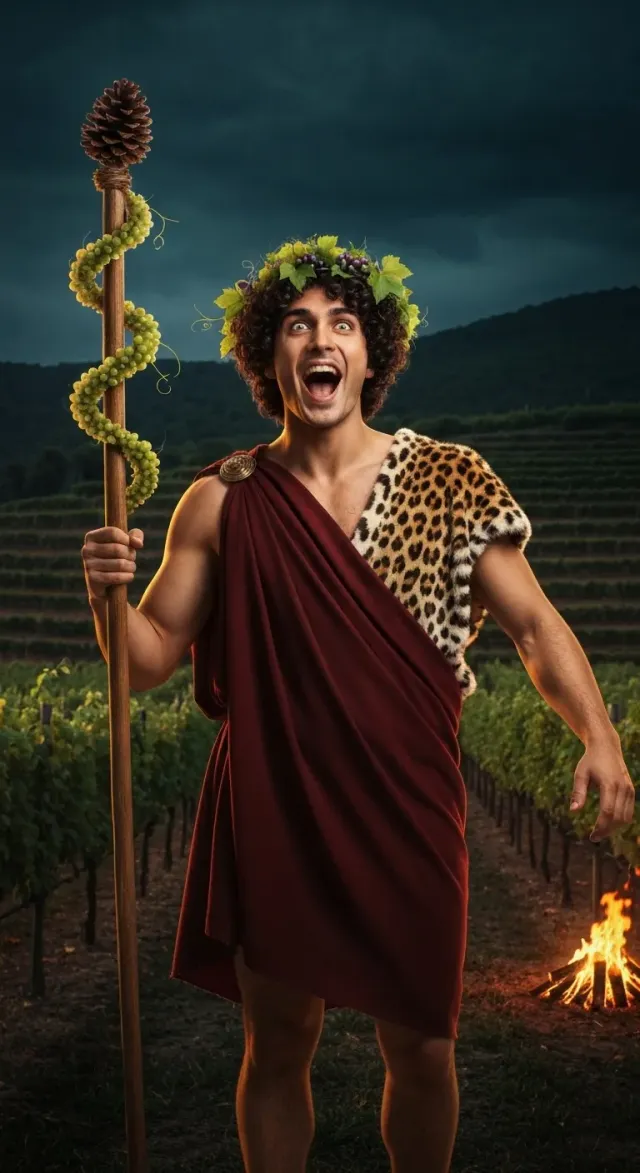
Who is Dionysos Zagreus?
Dionysos Zagreus is the Orphic face of Dionysus — not the wine-god of festival and theater, but the cosmic figure at the center of the most profound Greek mystery theology. In the Orphic tradition, Zagreus was the first-born son of Zeus and Persephone, a divine child destined to inherit sovereignty over the cosmos. Zeus placed the infant on his throne and set the Kouretes to guard him. But the Titans, ancient enemies of the Olympian order, lured the child with toys — a mirror, a spinning top, a golden apple, knucklebones — and when the child was distracted by his own reflection in the mirror, they seized him. Despite transforming into many shapes (bull, lion, serpent), Zagreus was overpowered, torn apart (sparagmos), and consumed by the Titans.
Only the heart survived. Athena rescued it and brought it to Zeus, who swallowed it. From that divine heart, Dionysus was conceived again through Semele — the Twice-Born God, carrying the soul of Zagreus within him. Zeus, in rage, struck the Titans with his thunderbolt, reducing them to ash. From those ashes — which contained both Titanic matter and the consumed fragments of the divine Zagreus — humanity was formed. Every human being therefore carries within them a dual nature: the Titanic (earthly, consuming, forgetful) and the Dionysiac (divine, luminous, remembering). The entire Orphic path of purification — through ritual, ethical conduct, initiatory death-and-rebirth, and successive reincarnations — is the journey of liberating that divine Dionysiac spark from its Titanic prison.
As Iakchos, he appears in the Eleusinian Mysteries — the torchbearer in the great nocturnal procession from Athens to Eleusis along the Sacred Way. His name was shouted by the initiates as they walked through the darkness toward the Telesterion, where the ultimate revelation awaited. The connection between Iakchos and Dionysos Zagreus links the two greatest mystery traditions of ancient Greece: the Orphic and the Eleusinian.
Where the Olympian Dionysus governs the ecstasy of wine, theater, and festival, Dionysos Zagreus governs the deeper mystery: that the divine is not only above us but within us, broken and scattered, waiting to be gathered and made whole. He is the god of the soul's journey home.
The Myths — cited to the sources
The Dismemberment of Zagreus by the Titans
Orphic Rhapsodies (fragments); Clement of Alexandria, Protrepticus 2.17-18; Nonnus, Dionysiaca 6
Zeus placed the infant Zagreus, son of Persephone, on the divine throne and appointed the Kouretes as his guards. The Titans, smearing their faces with gypsum to disguise themselves, lured the child with sacred toys: a mirror, a spinning top, golden apples, a bull-roarer, and knucklebones. When Zagreus gazed into the mirror and was captivated by his own reflection, the Titans seized him. The child transformed desperately — into a young Zeus, into Kronos, into a lion, horse, serpent, tiger, and finally a bull — but in bull form he was caught, torn apart, and consumed. Only the heart was saved by Athena.
The Creation of Humanity from Titanic Ash
Olympiodorus, Commentary on Plato's Phaedo 1.3-6; Orphic fragments (Kern)
After Zeus struck the Titans with his thunderbolt, they were reduced to ash and soot. Because the Titans had consumed the flesh of the divine Zagreus, their ashes contained both Titanic substance and Dionysiac divinity in mingled form. From this ash, humanity was fashioned. Every human being therefore carries a dual nature: the Titanic element (the body, the appetites, the capacity for violence and forgetting) and the Dionysiac element (the soul, the divine spark, the capacity for memory and return to the gods).
The Orphic Gold Tablets and the Soul's Journey
Orphic Gold Tablets (Thurii, Hipponion, Pelinna, Petelia); Graf and Johnston, Ritual Texts for the Afterlife
Buried with Orphic initiates were thin gold leaves inscribed with instructions for the soul's navigation of the underworld. The soul is told to avoid the spring of Lethe (forgetfulness) and instead drink from the pool of Mnemosyne (memory). When challenged by the guardians of the underworld, the soul must declare: 'I am a child of Earth and starry Heaven, but my race is of Heaven alone. I am parched with thirst and I perish — give me to drink from the spring of Memory.' The soul that remembers its divine origin is released from the cycle of rebirth.
Correspondences
Domains
the Orphic mysteries and soteriology · death, dismemberment, and rebirth · the divine spark (the Dionysiac soul within Titanic matter) · reincarnation and purification across lives · the Eleusinian Mysteries (as Iakchos) · the underworld and chthonic rites · Orphic hymns and theogony · sacred madness as divine revelation · the boundary between mortal and immortal
Symbols
thyrsus — fennel stalk topped with a pine cone, wrapped in ivy · grapevine and ivy · kantharos — his distinctive two-handled wine cup · leopard or panther skin (nebris) · pine cone · mask — the theatrical mask and the mask as divine presence · fennel · bull · snake
Sacred Animals
leopard and panther · bull · snake · dolphin · goat · lion · donkey (companion of Silenus and the Dionysiac thiasos)
Sacred Plants
grapevine · ivy · pine · fennel · fig · pomegranate (in Orphic tradition) · fir tree
Offerings
wine — especially good wine, poured generously · grapes and figs · ivy wreaths · honey · pine cones · incense — especially storax and frankincense · theatrical offerings — writing, performance, poetry offered to him · the first and last cup of wine at any symposion (drinking party) · music and dance · ecstatic rites and festival celebration · bull sacrifice (in his major festival contexts)
Also Known As
Zagreus (his Orphic first-born name, son of Zeus and Persephone) · Iakchos (his name in the Eleusinian procession — the torchbearer) · Dionysos Chthonios (Dionysus of the underworld) · Dionysos Nyktelios (the Nocturnal One) · Dionysos Lysios (the Loosener — of the soul from the body) · Bromios (the Thunderer — born from Zeus's lightning)
Day of the Week
null (Hellenic practice uses lunar calendar, not weekday associations)
How Dionysos Zagreus is worshipped
The worship of Dionysos Zagreus belongs to the mystery tradition rather than the public cult. In antiquity, Orphic practitioners followed a distinctive way of life: vegetarianism (because all flesh potentially contained the divine spark), abstention from beans, ritual purity, and initiatory rites that enacted the death and rebirth of the god within the initiate.
For modern practice: approach Zagreus through the Orphic Hymns, which are the primary liturgical texts of his tradition. Orphic Hymn 30 (To Dionysos) and the hymns to Persephone (his mother in this theology) and to the Titans are central. Meditate on the myth of dismemberment and reassembly as a metaphor for your own spiritual experience — the parts of yourself that feel scattered, consumed by the world, yearning to be made whole. The mirror of Zagreus is a powerful contemplative object: what do you see when you look at your reflection? The Titanic surface, or the divine spark behind it?
The Orphic gold tablets — buried with the dead as instructions for the soul's journey in the underworld — contain the famous declaration: 'I am a child of Earth and starry Heaven, but my race is of Heaven alone.' This is the Zagrean creed. Recite it in meditation. The path of Zagreus is the path of remembering what you truly are.
How do I start honoring Dionysos Zagreus?
If you are drawn to the mystery of the soul's origin, to questions about what survives death, to the feeling that there is something divine within you that the world has obscured — Dionysos Zagreus is calling. Begin with the Orphic Hymns (our Texts library includes them). Read the myth of Zagreus slowly and reflectively. Sit with the image of the mirror — what captivates you on the surface? What lies beneath? The Orphic path is contemplative rather than ecstatic: where the Olympian Dionysus asks you to surrender to the moment, Zagreus asks you to remember across all moments. Start with the declaration from the Gold Tablets: 'I am a child of Earth and starry Heaven, but my race is of Heaven alone.' Say it until you feel what it means.
A prayer to Dionysos Zagreus
Hear me, Zagreus, first-born of the throne,
Torn apart by ancient hands, yet not destroyed —
Your heart survived. Your light survived.
I carry a fragment of that same fire
Within this body of ash and earth.
Help me remember what I am beneath the surface.
Help me drink from Memory and not from Forgetting.
I am a child of Earth and starry Heaven,
But my race is of Heaven alone.
Hail Dionysos Zagreus, the Undying.
Festival days
- Eleusinian Mysteries — Boedromion (September/October); the great initiatory festival at Eleusis; Iakchos led the torchlit procession along the Sacred Way
- Orphic rites — no fixed public calendar; practiced by Orphic communities (thiasoi) at their own appointed times
- Anthesteria Day 3 (Chytroi) — the day of the dead; the chthonic aspect of Dionysos honored alongside ancestral spirits
What people get wrong about Dionysos Zagreus
- Dionysos Zagreus is not a separate god from Dionysus — he is the same deity understood at a deeper theological level. The Orphic tradition does not contradict the Olympian; it reveals what lies beneath the public cult.
- The Orphic tradition is not a fringe or marginal phenomenon. Orphic ideas deeply influenced Pythagoras, Empedocles, Plato, and through Plato, the entire Western philosophical tradition. The concept of the immortal soul imprisoned in the body, seeking liberation through purification, enters European thought primarily through Orphic channels.
- The dismemberment of Zagreus is not simply a violent myth. It is a cosmogonic event — the act that creates the conditions for human existence and the human spiritual path. It is comparable in theological weight to creation narratives in other traditions.
Also on this path
Aphrodite
Laughter-Loving, Golden Aphrodite, the Cyprian, Lady of Cyprus, Foam-Born, Goddess of Desire
hellenicApollo
Far-Shooter, Bright Apollo, Silver-Bowed God, Lord of Delphi, the Shining One
hellenicAres
Sacker of Cities, Man-Slaying Ares, Bronze-Helmed God of War, Insatiate of Battle, City-Sacking Ares